

This article has been available to Global Drinks Intel subscribers since August. For details on how to join them, please click here.
In today’s digital age, the media landscape has undergone a profound transformation. Algorithm-driven platforms perpetuate the belief that people hold diametrically opposed ideas and beliefs, leading them to curate personalised newsfeeds.
As a result, individuals unknowingly immerse themselves in echo chambers, reinforcing their own confirmation biases and contributing to the creation of ‘epistemic bubbles’. The book ‘Poles Apart: Why People Turn Against Each Other, and How to Bring Them Together‘ by Alison Goldsworthy, Laura Osborne and Alexandra Chesterfield outlines this new cultural evil superbly.
Polarisation in marketing
Media polarisation has far-reaching consequences for society. When people are exposed to information that only aligns with their pre-existing beliefs, they become less receptive to alternative viewpoints, better known as ‘confirmation bias’.
This phenomenon leads to the erosion of constructive dialogue, fostering divisions between social and political groups. The spread of misinformation – and disinformation – becomes more prevalent as people share and perpetuate content that supports their ideologies.
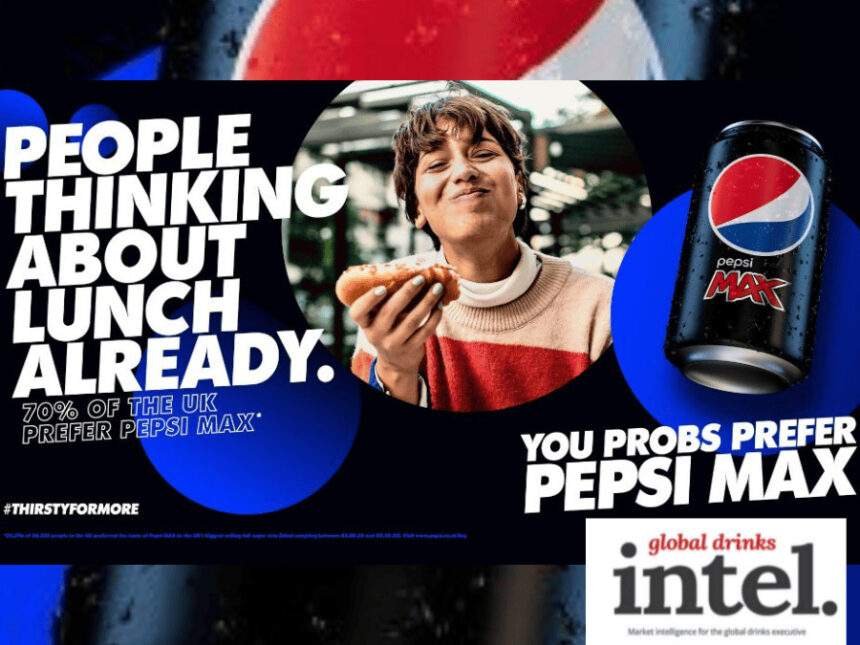
A recent out-of-home activation in the south of London for Pepsi Max serves as a thought-provoking example of how media polarisation can influence advertising strategies. Part of the brand’s wider ‘You probs prefer Pepsi Max’ campaign, one of its straplines proclaims: ‘People who don’t go north of the river. You probs prefer Pepsi Max’. The strapline of another ad reads, ‘People walking tiny dogs. You probs …’ – you get the idea.
While some of the campaign’s straplines, such as ‘People thinking about lunch already’, are harmless, picking a fight with Northerners or dog owners serves only to create polarisation.
In the UK, the north-south divide has long been a bone of contention – as has the divide between north and south London. Historically, those living in the south typically have a longer life expectancy, higher income and better standard of living than those in the north. By choosing to enter the cultural war through its advert placement, Pepsi Max is inadvertently perpetuating these divisions.
What Pepsi Max was probably trying to achieve was contextual advertising, which is a beautiful thing, when executed well. There could be another reason behind this approach – white space.
Maybe PepsiCo’s UK marketing department sat down and looked at the soft drinks category and where Pepsi Max’s competitors were positioning themselves. They probably would have taken a look at Coca-Cola, which has been investing in purpose-driven marketing activity across Western Europe that seeks to position its namesake brand as one that unites people in an ‘increasingly divided and hostile world’.
Consciously or unconsciously, Pepsi Max ended up picking an opposing lane to Coca-Cola. While Pepsi can be admired for trolling Coke over the years, saying the opposite purely for the sake of it is a dangerous position to take. In isolation, I don’t think anyone would ever understand that the strategy or creative is meant to be anti-Coke. Indeed, I’m not sure Pepsi really intended it to be that either. Rather, they would appear to have bought into a creative idea that hints at an ‘anti-everything-but-Pepsi’ stance.
The power of forward-thinking
Apple’s approach to competition offers valuable insights for brands navigating this polarised media landscape.
There’s a famous story that goes something like this: A senior Apple executive was in the back of a cab with a friend. The friend had laid his hands on an early release of the latest phone from Samsung. Dubbing the device an “iPhone killer”, he forecast the pending death of Apple. The senior exec sat back and listened. As the cab pulled up, the friend excitedly said: “Want to see it?”
“We don’t think in the past,” the exec replied, calmly. “We think in the future”.
Put another way, Apple simply isn’t interested in what Samsung (or any of its other competitors) does. Instead, the company invests its energy into what it will do. By focusing on what Apple can achieve in the future, rather than obsessing over the competition, the company maintains its innovative edge.
This proactive stance resonates with the trend among consumers to seek authentic connections with brands that prioritise progress and positive change.
My view of Pepsi Max’s positioning against Coke, for what it’s worth, is that it’s leading them to reductive advertising, rather than imagining the world they want to create.
The need to stay balanced
The polarised media environment poses significant challenges to society – hindering both constructive dialogue and the solving of problems. Brand owners must actively strive for a more open-minded approach, seeking diverse viewpoints and engaging in informed discussions to inform our brand strategies and creative approaches.
Identifying white space certainly offers opportunities for differentiation, but this requires a delicate balance of building the future rather than focusing on the present. Brand-trolling is a wonderful creative tool, but it should never mean that every message should carry an ‘anti’ stance.
Instead, focus on the world you want to create – rather than the world you want to destroy.
This article has been available to Global Drinks Intel subscribers since August. For details on how to join them, please click here.