

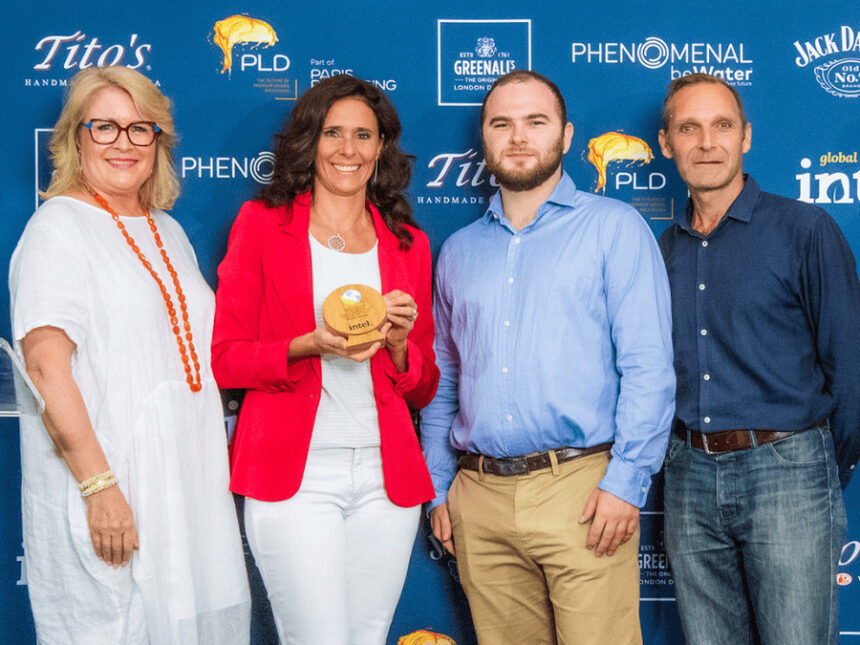
Earlier this month, Global Drinks Intel announced the winners of its inaugural ESG Awards. Here’s a look at why the winners won.
Sustainable Wine Producer – Ferrari Trento
Established in 1902 in Italy’s northern region of Trentino, Ferrari Trento’s profile has soared in recent years thanks to its official sponsorship arrangement with Formula One.
The company’s commitment to environmental sustainability impressed the judges thanks in part to its longstanding ban on the use of herbicides and chemical fertilisers. Instead, Ferrari Trento utilises natural fertilisers such as manure as well as copper or sulphur for plant protection.
Back in 2017, the firm received organic certification for all of its owned vineyards and has since “shared this mindset with the 700 growers that provide Ferrari Trento with their grapes through training and education activities led by Ferrari’s own team of agronomists”.
“All grape suppliers are asked to follow a strict protocol aimed at promoting a healthy and sustainable winemaking process.”
The company has secured carbon neutral status for its Scope 1, 2 and, partially, 3 emissions, with direct emissions hitting zero. As well as investing in a photovoltaic plant on the winery’s roof and purchasing electricity solely from renewable sources, Ferrari Trento also has an offset programme with certified carbon credits.
Special Commendation – Rémy Cointreau for Champagne Telmont
Telmont’s approach to its packaging warranted a special commendation, having transitioned to green glass for its bottles in 2021. “Transparent bottles, often used for Rosé and Blanc de Blancs cuvées, are not made from recycled glass,” the company says. “In contrast, green glass bottles consist of 87% recycled glass.”
The company has also phased out its use of heavier, bespoke bottles that come in at 900g. There’s also an ongoing trial of lighter standard bottles, which weigh 800g compared to the previous 835g. “Lighter bottles … generate around 4% less CO₂ per bottle during the melting and production processes. Successful tests have paved the way to produce 30,000 lighter bottles, available to customers from 2026.”
We watch with interest to see how the business gets on in achieving its target of becoming a “Climate Positive Champagne House” by 2030.
Subscribe to Global Drinks Intel in October for 50% off the usual annual cost