

This article has been available to Global Drinks Intel subscribers since May. For details on how to join them, please click here.
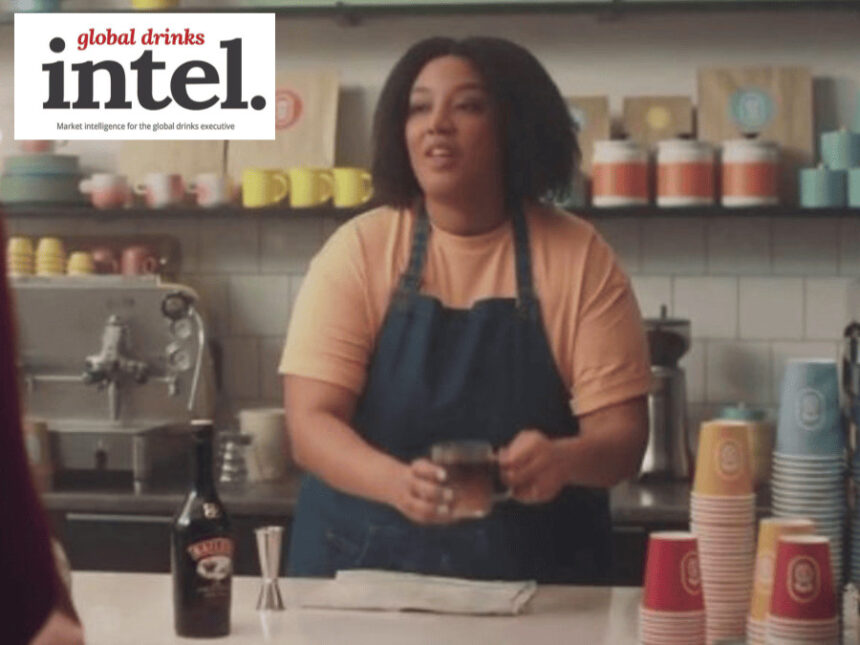
Have you caught Diageo’s recent TV commercial for Baileys yet? Set in a lively cafe where a barista announces a Baileys coffee is ready and inspires a collective, almost wistful, shop-wide chant, ‘Hot Coffee’ is an excellent example of advertising that left me intrigued by the successful strategy behind the brand.
Firstly, the brand owner should be commended for its long-term commitment to a strategy for Baileys. With CMO tenures averaging out at just 40 months, it’s common for strategies to be discarded and new directions set. However, it takes years to establish mental availability in consumers’ minds. Too often, brands sacrifice their investment for short-term tactics, and by the time a brand starts building mental availability based on an emotional idea, the strategy changes course and the brand is repositioned to stand for something else.
Diageo has been building Baileys’ equity as a ‘treat’ for years. After a decade of declining sales, the 2016 ‘Don’t Mind If I Baileys’ activation rescued the cream liqueur from cultural irrelevance. The revamp repositioned Baileys from an old-fashioned Christmas drink to an everyday treat and between 2014 and 2019, global volumes grew 32%.
By owning the treat moment and choosing to focus on a single-minded idea, Baileys had found an emotional need space.
Brands often attempt to own multiple emotional drivers rather than committing to a singular focus. With growing demand for no- & low-alcohol beverages, there’s a shift away from alcohol among younger consumers. Alcohol doesn’t have the same social status as it once did and is becoming a negative stereotype. By positioning Baileys as a treat, Diageo has cleverly navigated the stereotype and puts an acceptable face on drinking.
The clever folks at marketing effectiveness company System1 recently tested the ‘Hot Coffee’ ad, which achieved a 4.3-star rating. To put in perspective, only 5% of beverage alcohol ads achieve a 4-star rating or higher.
Baileys’ treat strategy was built on more than just product truth, cleverly linking the liqueur with everyday occasions. The key to this was the realisation that Baileys was not in competition with other drinks brands, but with other treats, such as coffee, ice cream and cake. This meant the marketable opportunity for Baileys became far greater.
The numbers really stack up – take coffee, for example. There are 1.8bn coffees sold each year in the UK alone, with over 10m cups consumed after 5pm every day. So 20% of the opportunity lies in the late afternoon and early evening post-meal, which is a significant occasion for a drinks like Baileys.
By landing an emotional insight linked to high-usage occasions, Baileys has created a single-minded strategy.
Diageo has been consistent with the brand’s story and visual identity for years. The single-minded thought taps nicely into ‘How Brands Grow’, a book written by Byron Sharp that sets out the idea of being consistent, avoiding unnecessary changes, and keeping a brand fresh and interesting. If you look at still images from a few years’ worth of Baileys TV ads, you’ll notice how similar they are. The spots might reinvent the plotline and story, but the visual elements tell a consistent story that makes it easy for consumers to recognise multiple moments in the ad as being distinctly Baileys.
There is a consistent pattern to the images. While each is clearly different and shot by a different director, they contain similar elements. They demonstrate human precision, are shot like a food advert [not a beverage alcohol brand] and place the consumer at the point of a ritual that denotes the pleasure of expectation. So often, brands and agencies believe their distinctive elements are their logo, font and colours – The truth is, it’s more about brand behaviour.
Baileys has also executed a distinctive rate of sales drivers in the on-premise. Last year in the UK, they worked with Miller & Carter Steakhouse to build bespoke menu items. These not only achieve rate of sale but also help consumers understand that the usage occasion is clearly a treat.
Overall, Diageo’s success with Baileys can be boiled down to having a consistent strategy while updating the narrative to reflect current culture.
This article has been available to Global Drinks Intel subscribers since May. For details on how to join them, please click here.