

This article has been available to Global Drinks Intel subscribers since May. For details on how to join them, please click here.
Premiumisation is still the leading consumer trend in India, but others are starting to come to the fore as the country’s consumer base comes of age and seeks new experiences.
The importance of premiumisation to the spirits market in India is not new news. At the same time, however, the country’s consumers are becoming more sophisticated, and spirits drinkers are increasingly seeking new experiences and products, including craft spirits.
At Amrut Distilleries, which celebrates its 25th anniversary this year, MD Rakshit Jagdale is seeing consumers pay for better-quality spirits and drink less. “That is what we’re witnessing across the spirits spectrum in India, across all categories,” he says. “Incomes have gone up and people are willing to spend a bit more.”
John Distilleries’ head of PR, digital marketing & communications, Asa Abraham, agrees. “Consumers are willing to pay more for premium and high-quality products, especially those that offer new and exciting experiences, including trying new and innovative alcoholic beverages, as well as exploring different flavours and varieties of whisky,” she says.
Jagdale cautions, though, that the growth of this trend has slowed to some extent. “Double-digit growth in premiumisation is not what we’re seeing at the moment, but growth is still fairly robust and at the moment the trend is continuing.”
Radico Khaitan’s president of international business, Sanjeev Banga, expects value growth to outpace volume rises in the country’s spirits market this year, thanks to the prevalence of premiumisation. “Overall volume growth will be around 8%, but premium category growth will be much higher,” he says. “All spirits categories are doing well in India, and we are seeing traction in RTDs as well.”
Eco, experiences, no & low and craft trends drive consumption
Higher-end segments are performing particularly well, according to Jagdale. “Luxury malts and gin are doing well at the premium end; rum at the premium end is showing some good signs; brandy is fairly stable and so is vodka,” he says. “The on-trade has bounced back significantly in India. Most of the joints are crowded these days, even on weekdays, which wasn’t the case pre-pandemic. People are keen to go out and have a nice time with family and friends.”
The rise of the no- & low-alcohol segment is also evident in the country. “We find consumers becoming increasingly health-conscious and looking for healthier options, including low-alcohol and alcohol-free beverages,” reports Abraham. “They are more aware of the environmental impact of their purchasing choices and are looking for sustainable and environmentally friendly options.”
She also highlights some of the other trends at play that emphasise the growing sophistication of consumer choices. “Consumers are also looking for personalised experiences, including custom-made and craft whiskies that cater to their individual tastes and preferences,” says Abraham. “They’re moving beyond brands; consumption driven by experiences is the new key trend in the Indian spirits market. Brand and price-driven premiumisation is still big, but we also see consumers willing to try small, new or craft products and brands that offer something new and different. This has made ‘craft’ the new buzzword in the market.”
Nao Spirits founder & CEO Anand Virmani also sees the development of craft spirits as an important trend linked to premiumisation. “There is a definite movement towards craft,” he says. “We’re probably at that point in our craft journey that the UK was ten years ago; more consumers are coming into the space, and there’s a parallel explosion of craft spirits brands. Consumers are definitely looking for craft spirits over the usual commercial brands and there’s a willingness to pay a premium as well.”
Gin continues to expand, while vodka’s outlook remains positive
The trend is also being felt in gin. “Craft gin is slowly making its way across the country,” says Virmani. “It’s a highly regulated and fragmented market with new cities opening up for us every few months – mostly to do with each state requiring an annual registration and a separate label. New gin brands are entering the space frequently, each with their own USP.”
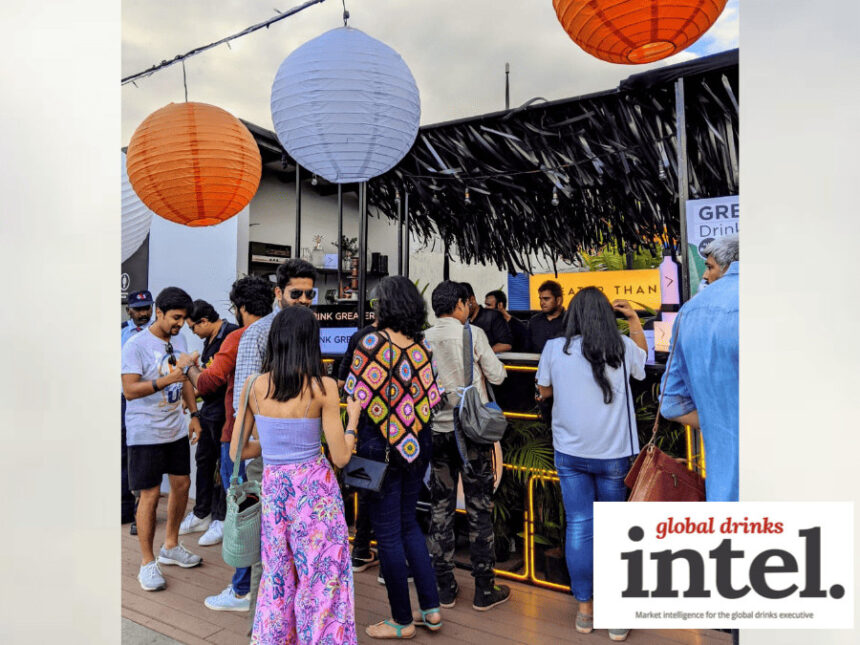
As well as expanding the distribution of its Greater Than Gin brand, Nao Spirits has added a limited-edition line, Broken Bat, which is aged with broken cricket bats made of Kashmir willow and targeted at whisky drinkers as well as gin lovers. A new bottle design has also been introduced for the company’s other gin, Hapusa.
According to Amrut’s Jagdale, the arrivals of more new premium brands is helping drive gin’s growth. “The new launches in gin are massive in India. Every other day we get to hear of a new gin. There are some available at the deluxe and prestige end, but these aren’t doing well, but premium gins have been launched over the past three or four years and that segment is doing really well.” Recent releases include The India Craft Spirits Co’s Terai Gin and Pumori Small Batch Gin from Goa’s Fullarton Distilleries.
In white spirits, Radico Khaitan’s Banga believes trends are positive for vodka and gin. “The trend across categories is one of premiumisation and we’re also seeing robust growth in white spirits,” he says. “Vodka has seen a big turnaround and grew by 30% in [fiscal] 2023. We expect the growth momentum to continue this year as well.
“Gin was extinct in India until a few years ago but today, craft gins have revived the category and consumption is galloping, albeit from a small base.”
Radico Khaitan’s Magic Moments holds a 59% share of the vodka market in India, according to Banga, and is performing strongly. “Sales crossed the 5m-case mark in 2022–23,” he reveals. “Magic Moments continues to be the growth driver in this category for both plain and flavoured vodka.”
Indian whisky consumers ‘coming of age’ and ready to experiment
As well as white spirits, Nao’s Virmani says: “Rum, whisky and agave seem to be the other categories garnering a lot of interest at this point.”
John Distilleries’ Abraham highlights the performance of the dominant whisky segmet. “Indian whisky is doing great and will continue to be the country’s leading category of spirits,” she says. “Single malts, limited-edition bottlings, craft and New World whiskies will gain more recognition as the consumer gains more awareness and is open to experimentation. The Indian whisky consumer is coming of age and a focus on the experience will drive this next phase, as opposed to the price-driven premiumisation we’ve seen so far.”
Whisky, as the largest single spirits segment across India, drives most consumer trends, says Abraham. “The volume growth is small but steady, while the shift within the category towards premium and single malts is much greater, leading to an exponential growth in the value size of whisky,” she says.
Single malt whisky in India is enjoying fast-paced growth, points out Jagdale. “The entire category, be it Scotch single malt, Irish or Japanese or Indian, is seeing double-digit growth,” he says.
Beyond whisky, Abraham says: “Brandy is a major category only in the south and is doing fine in terms of volumes. There have been several new rums and agave spirits in the market, and we can expect to see growth in these categories over the next year or so.”
Jagdale notes that rum is dominated by the economy, deluxe and prestige segments. “Premium rums are yet to gain much traction in India,” he says. “People are recognising that premium rums do exist and they’re doing well. Our brand, Two Indies Rum, is doing exceedingly well.”
Premiumisation to remain the major driving force
For this year, Abraham expects value growth for spirits to outpace volumes considerably due to premiumisation. “Value growth will also be partly driven by tax increases, but the bulk of this will be from new LDA consumers and existing ones who shift from binge drinking cheaper spirits to a more responsible drinking style [that includes] consuming premium spirits in acceptable social environments, as well as increased alcohol consumption among females,” she says.
“Apart from the growth of existing premium spirits, we will also see the launch of several new global and Indian world-class brands that will give the domestic consumer a greater choice.”
With Diageo India predicting “significant premiumisation” between now and 2030, driven by favourable demographic trends such as rising disposable income, a large working-age population and growing urbanisation, the trend will remain omnipresent in India for the next few years, at least.
This article has been available to Global Drinks Intel subscribers since May. For details on how to join them, please click here.