

This article was initially published in the December/January issue of Global Drinks Intel magazine. For details on how to subscribe, click here.
There’s a renewed focus on vineyards and soils as producers move away from ‘supermarket Sherry’ and target the fine wine category. Richard Woodard reports.
Immense popularity can have unintended consequences. During the 1960s and ’70s, Sherry was a colossal presence in the wine market, enjoying huge popularity all over the planet. Then, boom morphed into commoditisation, luring many producers into a self-defeating, down-trading race to the bottom as they tried to capture – and retain – market share.
As Sherry consumers aged and younger drinkers turned their backs, the need for transformation was obvious. Since the Millennium, that transformation has gradually gathered pace. Younger consumers are slowly rediscovering the joys of Sherry’s immense diversity and versatility - but the drink they are falling in love with is often a world away from what it was half a century ago, both in terms of character and price.
Now, premium-plus products are beginning to gain traction at the expense of lower price points.
“Sherry has long suffered from the consequences of the volume production mentality of the 1960s and 70s, and the image that phenomenon left behind,” says Victoria González-Gordon, chief sustainability officer at González Byass. “Thankfully, things have changed and the category has now reached the point where top wine enthusiasts appreciate and appraise Sherry, and its long and elaborate production process.”
Philosophical shift in production breathes new life into category
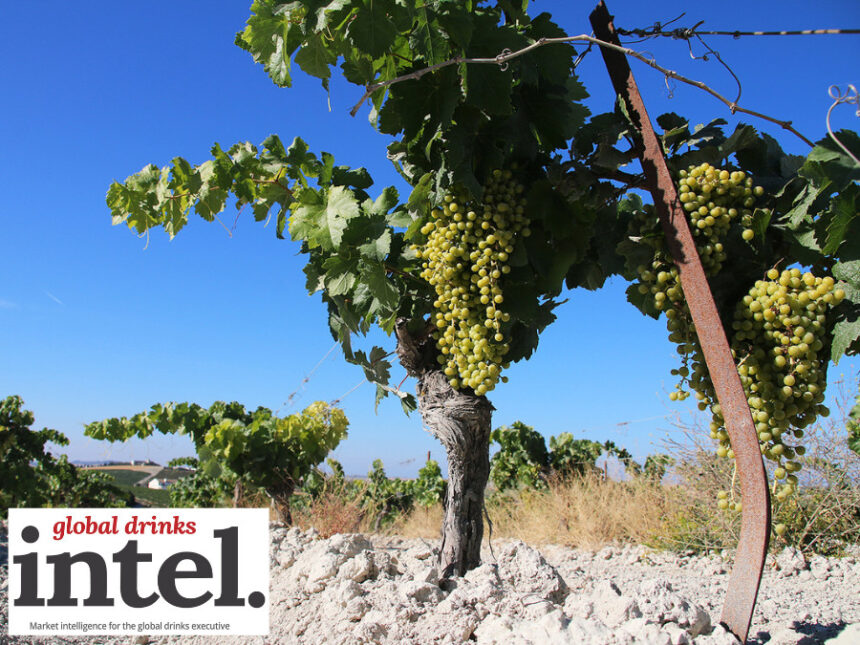
Beyond the focus on higher-value products lies a process not so much of innovation as rediscovery. “For the last 60-plus years, Sherry has been seen as a wine made in the winery, rather than the vineyard," says Jo Lory, portfolio manager at the UK importer for Bodegas Luis Pérez, Indigo Wine, "Before then, there was much more emphasis on individual areas and vineyard, called pagos.
“A group of younger producers, such as Willy Pérez (Bodegas Luis Pérez, De La Riva) and Ramiro Ibañez, have rediscovered the historic maps, and started to make individual wines based on the differences in soils and climats across the region.”
This philosophical shift is a massive one for the industry, as Steve Cook, international director at Barbadillo, points out. “We own vineyards and we make wine that we later age, bottle and market,” he says. “This may sound like the normal way of things but in the Sherry district, this is rare. Tradition has it that growers, producers and bottlers are separate and distinct companies.”
‘Dual terroir’ of vineyard and bodega crucially important
Given this structure, it’s hardly surprising that Sherry’s vineyard has been rather forgotten. Like Barbadillo, Williams & Humbert is a landowner, with 250 hectares of vines in Jerez Superior, and has already bottled two pago fino Sherries from 2017, Pago de Carrascal and Pago de Añina.
According to international marketing manager Gonzalo Medina, the company has cultivated 40 hectares of this estate using ecological methods since 2015, leading to the release of ecological finos and olorosos. Williams & Humbert is also “immersed” in a unique project to grow Pedro Ximénez grapes ecologically in the region.
“The renewed focus on terroir, which many producers did ignore for some decades, is undoubtedly a good thing,” says Cook. “We must never forget, however, the importance of the ‘other’ terroir in Sherry production: the terroir of the bodega. The importance of the dual terroir is a fascinating conversation.”
With vineyard and bodega working in harmony, Sherry is capable of a vast and diverse amount of innovation, or more accurately, of resurrection - repurposing historical techniques for the modern consumer. Many have laid claim to having kickstarted this process, including the pioneering work in the first decade of the 21st Century undertaken by Equipo Navazos.
“We do everything that is groundbreaking and out of the mainstream,” says co-founder Jesús Barquín, reeling off a list of products from en rama (unfiltered) to single-vineyard Sherries, añadas (vintages) and unfortified ‘Sherries’ that currently aren’t Sherries at all. “There's an increasing interest in these approaches. It would be great to know what the future will bring, but I really do not know.”
Need for innovation contrasts with traditional focus
Others are not shy about touting their own reinvention credentials. Beyond core products such as its Solear manzanilla, Barbadillo claims to have pioneered en rama in 1999 and, at the other end of the age spectrum, 100-year-old wines called reliquias. Castillo de San Diego, the company’s still white wine made using Palomino grapes, has been Spain’s bestselling white for more than 25 years, and Barbadillo has also bottled estate-grown red and traditional-method sparkling wines.
Many are balancing the need for innovation with a retained focus on more traditional Sherries: Williams & Humbert’s varied portfolio ascends the age ladder using the criadera and solera systems, from premium six-year-old Sherries including Dry Sack, Canasta and Pando, to VOS and VORS products, aged for 20 and 30 years respectively, such as Jalifa, Canasta 20, Don Guido and Dos Cortados. The company’s stocks of vintage Sherries (añadas) date back to the 1920s.
It’s been 13 years since González Byass first bottled Tío Pepe En Rama, and the company’s annual 'Las Palmas Collection' of old finos (plus one long-aged Amontillado) have become highly sought-after limited releases. In contrast with the mass-market Sherries of 50 years ago, these are premium-and-above products for wine lovers and sommeliers. The main challenge, as Williams & Humbert’s Medina acknowledges, is communicating the richness and complexity of Sherry to consumers.
Markets such as Spain, Germany and Italy are responding positively so far, he says. The need to prioritise higher-value products is not in doubt, although Barquín at Equipo Navazos also adds a caveat: “It would be reckless to abandon the mass market at this point,” he says. “The ideal path would be to make a step-by-step replacement of the latter by the former.”
Barbadillo’s Cook goes further. Change, he says, is literally vital. “It's not only a question of image-building, but one of survival,” he argues. “The volume of ‘supermarket Sherry’ will continue to decline in future, for both internal and external reasons.
"Sherry will eventually settle, almost exclusively, into the fine wine category.”
This article was initially published in the December/January issue of Global Drinks Intel magazine. For details on how to subscribe, click here.