


This article was initially published in the February issue of Global Drinks Intel magazine. For details on how to subscribe, click here.
Irish whiskey is defying the odds and looking forward to regaining its former glory. Joe Bates reports on a category growing both in size and confidence.
Despite the many economic headwinds buffering the wider drinks industry, Irish whiskey continues to go from strength to strength. In 2021, according to IWSR Drinks Market Analysis, sales volumes grew a healthy 21.5% to break the 14m-nine-litre-case barrier, with demand in the US, the segment’s top export market, rocketing by over 15% to more than 5.75m cases.
Brand owners are reporting a similarly strong 2022, belying fears over rising costs and worries about the impact of inflation on consumer spending power. The return of high-spending American tourists to Ireland and the recovery of the Global Travel Retail channel boosted the category’s performance last year.
Bernard Walsh, founder & CEO of Walsh Whiskey, reveals that sales of the company’s Writer’s Tears and The Irishman brands grew 37% in Irish GTR last year. Walsh claims Dublin Airport is now the biggest retail outlet for Irish whiskey sales globally. “It has proven an excellent channel for proving the potential growth opportunities for super and ultra-premium Irish whiskeys,” he says. “The Walsh portfolio is one of the fastest growing in the whiskey category in Dublin Airport.”
Similarly, Alex Thomas, master blender at Cuervo's Bushmills Distillery in Northern Ireland, hails the return of tourists to the scenic single malt distillery on the County Antrim coast as one of the highlights of her 2022.
“We missed people at the distillery for so many years due to Covid-19,” she says. “It was a real joy for them to be able to come back and see us. It was great to have that buzz of people around the site and in the bar area, excited to hear how we make whiskey.”
Emerging markets help to make up for Russia’s absence
One of the few disappointments for Irish whiskey last year was the effective removal of the Russian market when the country's forces invaded Ukraine in February. Before the war, Russia was the segment's third-largest market, posting a 34% year-on-year volumes rise in 2021. Ukraine was a smaller but still important market with annual volumes of 231,440 cases.
“Prior to the war, Russia and Ukraine were both in the top ten markets for the Walsh portfolio,” concedes Walsh. “We've seen significant uplift in the other CIS countries to offset most - but not all - of the impact of the war in that part of the world. Contributions from new markets for us, such as South Africa and Nigeria, are more than making up for any lost ground.”
Further proof of the health of Irish whiskey was demonstrated in September last year when Pernod Ricard's Irish Distillers division announced a EUR250m (then-US$247m) investment to build a new whiskey distillery in County Cork on a 55-acre site adjacent to the existing Midleton Distillery. Due for completion in 2025, the distillery will produce Jameson, Powers, Redbreast, Midleton Very Rare, the Spot family and Method And Madness.
“The distillery will be a landmark development built with sustainability at its core,” explains Irish Distillers' international marketing director, Brendan Buckley. “It will be carbon neutral due to innovative MVR (mechanical vapour recompression) technology that reuses waste heat and uses biogas produced on site. Ultimately, this will help us achieve our goal of transforming Midleton Distillery into a fully carbon-neutral operation by the end of 2026.”
Category leader's ‘fantastic year’ of growth
Buckley says 2022 was a “fantastic year” for Jameson, Irish Distillers’ flagship brand and the top-selling Irish whiskey brand globally. “For the first time ever, we saw sales surpass 10m cases globally,” he says. “While the US is still our largest market, we’ve also seen growth in all key and emerging markets - Jameson surpassed the 100,000-case mark in India and Zambia and 200,000 cases in Nigeria for the first time.”
Like Jameson, Dublin’s Teeling Whiskey is also riding high, according to sales & marketing director Stephen Teeling. The company sold nearly 1.8m bottles last year and Teeling credits the first edition of Teeling’s 'Wonder of Wood' series being named 'World’s Best Single Pot Still' at the 2022 World Whiskies Awards as a standout.
“It was a real pinch-yourself moment walking up there [to receive the award], when before, the main players, like Redbreast, seemed to win it every year," he says "The fact that we built something from scratch that we matured, bottled, launched and then were rewarded for, was a massive highlight.”
Premium interest drives luxury tier
Teeling continues to see more consumer interest in premium expressions. “The entry price for Irish whiskey has ramped up a little bit,” he observes. “People now are drinking bottles of Irish whiskey costing EUR50–EUR60, whereas when we launched in 2012, there were those who thought we were mad releasing an Irish whiskey at EUR35. The category has been good at not racing to the bottom to become the cheapest on display.”
A luxury tier showcasing rare and collectable Irish whiskies is also developing as the category takes a leaf out of both Scotch and Cognac's books. At London’s Selfridges department store in December and January, The Craft Irish Whiskey Co opened a pop-up store which featured rare single malts such as The Devil’s Keep, a 30yo whiskey priced at GBP12,400 (US$15,300) which was matured in American, French and Hungarian oak and gift boxed with glasses, whiskey stones and a 24ct gold water pipette.
The pop-up also featured The Emerald Isle, a rare Pedro Ximénez cask-finished 30yo expression housed in a walnut display cabinet along with a Fabergé Celtic egg made from 18ct gold, a Swiss timepiece encased in rose gold with an alligator strap and a mother-of-pearl face, and two rare Cohiba Siglo VI Gran Reserva 2009 cigars. Described by Craft Irish Whiskey as the “rarest Irish single malt in existence”, the Emerald Isle was limited to seven units, the first of which sold at auction for $2m.
Distillers eschew playing things safe on innovation front
In addition to moving up the value ladder, the segment is diversifying away from its reputation as a 'safe', smooth-tasting entry point into whisky/whiskey. In October last year, Teeling launched the heavily peated Blackpitts Cask Strength, a limited release of 8,400 units, while Waterford Distillery in the south-east of the country recently released two expressions, Ballybannon and Fenniscourt, made with Irish peat and barley.
“It’s the first time in generations anyone has used Irish peat: current Irish products use Scottish peated malt,” explains Waterford head of brand Mark Newton. The new whiskies are part of the distillery’s 'Arcadian Farm Origins' range, which Newton says explores the “old ways” of production and their influence on barley. “Previously, this range included Ireland’s first organic-certified whiskey and the world’s first biodynamic whiskey,” he says.
Another company doing things differently is Dingle Distillery in County Kerry. The company has recently launched a single malt in the US that was matured in a mix of ex-Bourbon and PX Sherry casks priced at US$100 per bottle. “We don't play in the blended Irish whiskey space that Jameson dominates as we only produce single malt and single pot still whiskies,” explains Hunter Leese, brand manager at Dingle’s US distributor Hotaling & Co.
“We also differentiate ourselves from the more commercially available brands by finishing all of our whiskies in first-fill casks sourced from the finest producers of Bourbon, Sherry, Madeira, Moscatel and a host of other barrels we experiment with.”
Cracking the US is still the ultimate prize
The US remains the top export target for all Irish whiskey producers but, despite its potential, it’s not an easy market to crack.
“We’ve got a great foot in the door, having started exporting to the US in late 2020," explains Waterford's Newton. "But, as everyone will explain, this is not just one market but 50 individual markets with their own ways of doing things.”
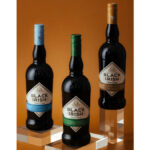
Sláinte Whisky is another newcomer to the US, launching its Black Label Smooth Blend late last year. “Black Label is produced in partnership with The Great Northern Distillery and this relationship has helped Sláinte expand its geographical reach in the US,” explains co-founder Richard Davies, whose partner in the venture is Hollywood actor Liev Schreiber. “We’ve been working with Great Northern since 2017, so our unique blend has had plenty of maturation.”
Despite competing against the category’s big hitters such as Jameson, Proper 12 and Tullamore Dew, Davies remains confident about Sláinte’s US potential. “Our blend is a multi-award winning product at a fantastic price point. We've physically launched in five states where we can really target our consumer and work closely with distributors and specifically chosen bricks & mortar retail partners. Our online capabilities have helped generate sales with the ability to sell into 42 states.”
Davies’ upbeat stance is typical of a category that is expanding quickly and setting its sights high. In 2010, there were just four Irish whiskey distilleries; today there are over 40. Irish whiskey's appeal among Millennial and Gen Z consumers, its growth in emerging markets such as Nigeria and ongoing premiumisation all hold the segment in good stead.
This article was initially published in the February issue of Global Drinks Intel magazine. For details on how to subscribe, click here.