

Consumers’ willingness to try something new has led to a spike in the popularity of ‘New World’ whiskies, but Irish whiskey is the world’s fastest-growing premium spirit. Richard Woodard reports.
Long gone are the days when Scotch could claim to enjoy any form of automatic pre-eminence over all other contenders in the whisky/whiskey industry — and rival origins were left to compete at lower price points, while luxury blends and single malts ruled the high-end.
As American and Irish whiskey producers have grown in confidence on the back of spiralling consumer demand, less-heralded whisky nations have also refused to accept the status quo — aware that the market has moved on in search of fresh excitement.
“This is not a new trend,” says Heemanshu Ashar, global brand ambassador for Paul John, the single malt produced in Goa, India, by John Distilleries. “We’ve seen the world order of wine change long ago from the Old World wines of France, Italy, Spain, Germany and Portugal to the Americas, Australasia and South Africa, and on to the new New World of wines from India, Lebanon, China, Vietnam, Thailand, etc.
“Similarly, the whisky industry has taken up its wheel to turn outside Scotch with Irish, Welsh, American Bourbons and ryes, to Asia with Japan, Taiwan and India. With the growth of consumers came a need to experiment more, and appreciation beyond the regular Scotch developed, pushing the industry to up its game.”
For Paul John, Asia’s “big drinking culture” is now a major growth priority as consumers seek more choice in premium whiskies, with France, Germany and the UK also promising thanks to a consumer willingness to explore and experiment.
Meeting the demand for something different and unique
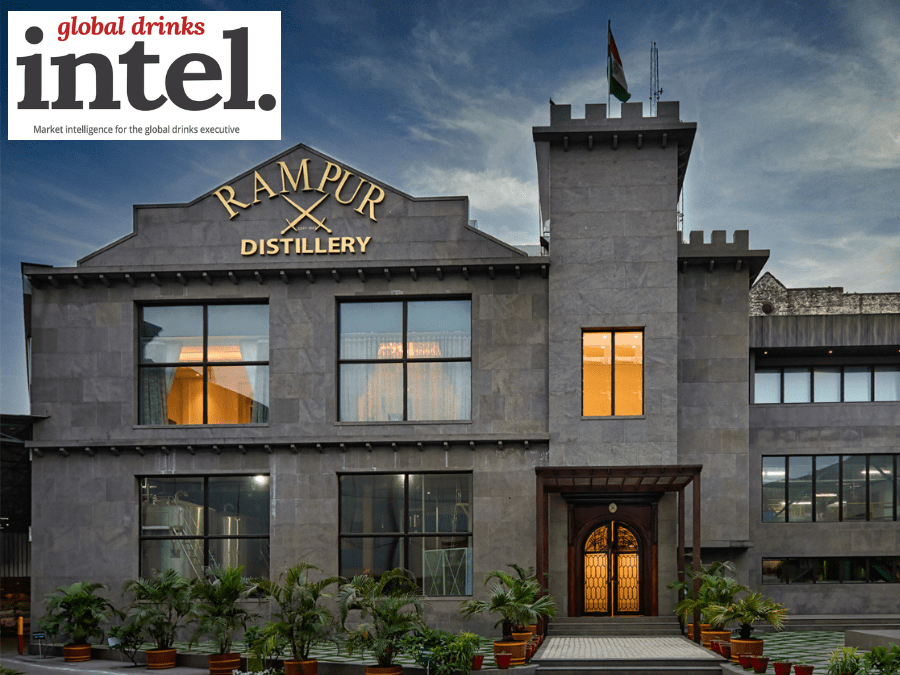
Some 2,000km northeast of Goa lies the city of Rampur, which gives its name to another emergent Indian single malt whisky, owned by Radico Khaitan. Here, Sanjeev Banga, president of international business, echoes Ashar’s view.
“The rising popularity of New World whiskies is ample evidence that there was a need to introduce something different, something unique,” he says. “Consumers are willing to experiment and try new brands, but will switch only if they like the quality of the liquid inside. The trade has also acknowledged this change in consumer behaviour, and is very receptive to listing New World whiskies.”
Amid the optimism, it’s easy to forget how quickly things have changed. The more traditional whisky-producing nations of Ireland, the US and Canada have long histories and a well-established global status, even if they have experienced their share of ups and downs over the centuries. But, only 20 years ago, there was novelty to the sight of Japanese whiskies winning international awards, let alone expressions from elsewhere in Asia, such as India or Taiwan.
Today, Kavalan, a standard bearer for Taiwanese whisky, is sold in more than 60 markets — but it wasn’t always the case, according to brand ambassador & global PR officer Sandra Tsai. “When Kavalan Classic, known as Taiwan’s first single malt whisky, launched in December, it was very hard for us to sell, even in Taiwan,” she recalls. “This was because we are a Taiwanese whisky without an age statement: We don’t have a big number on the bottle. During that time, people tended to buy whiskies from Scotland or other traditional whisky-making regions.”
What followed were years of hard work and investment from Kavalan owner King Car, including the opening of a branded whisky bar and stores — not to mention entering a number of international competitions, with great success. The strategy has clearly worked and now the hugely promising Chinese market is a clear priority for the business.
“In recent years, the scale of China’s whisky market has grown year by year reaching a scale of CNY3bn (US$417.1m) in 2020, and the population of whisky consumers is getting younger,” observes Tsai. “King Car has ten branches in different provinces and three Kavalan stores in Shanghai, which will continue to expand in the future. We’re very optimistic about the development there, and we introduce a limited-edition cask selection each year at [consumer event] Whisky Live Shanghai.”
The activities of pioneers like Kavalan — and before them, Japanese producers including Suntory and Nikka — have done much to blaze a trail for others, such as Paul John and Rampur, to follow. The feeling now is that international whiskies beyond the traditional heartlands have acquired a kind of critical mass, with educated consumers eager to try the latest point of origin, whether it’s England, the Nordic nations, Australia or the fast-developing malt whisky scene in China.
Sometimes, these whisky explorers are firmly established Scotch, Bourbon or Irish whiskey fans, sometimes not. “Apart from traditional Scotch drinkers, it’s also young consumers/professionals that are well-travelled and willing to try something new,” says Banga. “They’re drinking less, but premium.”
Banga believes the COVID-enforced closure of the on-premise and working from home helped this process as people increased their at-home consumption and upgraded their whisky purchases. “We expect a large proportion of them to continue consuming the premium offerings, even as the markets open up,” he adds.
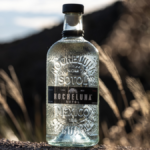
To the ever-lengthening list of emergent whisky-producing nations, we can now add Mexico; in the recent past a fast-growing market for blended Scotch brands, such as Diageo’s Black & White. In October last year, Pernod Ricard acquired a stake in Abasolo, a Mexican whisky that plays strongly on its origins.
According to Michael Merolli, CEO of Pernod Ricard’s ‘House of Tequila’ unit, the mission of Abasolo is “not just to show that Mexico can make high-quality whisky, but that we can innovate within the whisky category through methods and materials that are core to our Mexican provenance”.
This includes the use of 100% ancestral corn in the making of Abasolo, as well as the traditional Mexican cooking technique known as ‘nixtamalisation’. During fermentation, special yeasts — Champagne yeasts, for instance — are used to bring specific qualities and flavours to the wash. The company is also exploring the effect of the local climate on maturation, allowing the whisky to age in an open warehouse amid fluctuating temperatures.
Crowded market drives innovation to create standout
Savvy whisky-makers from ‘new’ countries realise it’s not enough to merely produce a local facsimile of Scotch, Bourbon or Irish whiskey — to carve out their own niche and attract attention in a crowded market, they need a distinctive offer that says something about where they’re from.
In turn, this is driving innovation among more established producer nations. “The super-premium category is in flux, with consumers open to experimentation, trying new ideas and breaking the traditional ‘rules’ established by the Scotch whisky category,” says Sophia Angelis, MD of Jack Daniel’s Brands at Brown-Forman. “Super-premium American whiskey is increasingly seen as offering a more approachable, innovative and experimental whiskey experience, and consumers are prepared to pay a higher price.”
While still dwarfed by super-premium Scotch, she adds, super-premium American whiskey is currently growing at a much faster pace, both in the US and in a rising number of emerging markets, such as Poland, Turkey, China and Brazil. Such growth is only possible if you can maintain consumer interest in your brand with a succession of new releases, especially small-batch and limited-edition expressions, such as Jack Daniel’s Aged Series, as well as larger production runs — for example, the brand’s recently-launched Bonded Series.
“Innovation is important, in that it identifies consumer needs and addresses gaps in the Jack Daniel’s portfolio,” says Angelis. “It enables the brand to extend its presence across multiple price points and is a critical contributor to growth and profitability.”
This upward price trajectory for American whiskey has been recognised by Pernod Ricard with the formation earlier this year of ‘The American Whiskey Collective’, a grouping of the company’s four super-premium-plus brands: Jefferson’s, Rabbit Hole, TX Whiskey and Smooth Ambler.
“We’re seeing a strong expansion of prestige brands within US whiskey, and we believe there’s still a lot of runway for growth, as US whiskies under-index in share of prestige within the category, versus other segments like Scotch and agave,” says AWC head Craig Johnson. “That’s a key reason why we believe there’s an immense amount of opportunity for this category and our brands’ ability to win domestically and globally.”
Here again, innovation is a key attribute, through products such as Jefferson’s Ocean and Jefferson’s Ocean Aged at Sea Rye, which claims to be the first rye whiskey aged at sea. Johnson describes the latter as a fully-mature rye that was double-barreled (75% in char 3 barrels, 25% in toasted), before being transported by ship through various ports around the world — the same maritime ‘finishing’ technique used for other Ocean series expressions.
Irish whiskey takes the crown for fastest-growing premium spirit
The fastest-growing premium spirit in the world, however, isn’t American whiskey — or, indeed, that from Mexico, Taiwan or India — but Irish whiskey. So says Brendan Buckley, international marketing director at Pernod Ricard’s Irish Distillers division, adding that the category “can compete with the best in other luxury categories, such as Scotch and Cognac”.
Irish Distillers’ prestige portfolio is currently experiencing its highest-ever rate of growth, thanks to an increasingly broad offer that encompasses single pot still whiskies Redbreast and the Spot range, as well as luxury blend Midleton Very Rare. Further down the price chain, innovations include the likes of Jameson Cold Brew and Jameson Orange, as well as the Method and Madness experimental bottlings from a microdistillery within the Midleton complex.
Here, too, pricing has been extended upwards, through products like the Method and Madness Japanese Trilogy — single whiskies finished in Japanese Mizunara, Chestnut and Cedarwood casks, with the Mizunara expression priced at EUR3,000 (US$3,075) and limited to 252 bottles worldwide. Meanwhile, Jameson 21 Years was released last year with an RRP of EUR310 via an online ballot, with 2,301 bottles available.
“The accessible luxury category is no longer just for diehard whisky fans, but a much broader consumer audience with spending potential,” Buckley says. “For these discerning whisky drinkers, authentic brands which have meaning are of greatest interest, and we know that our target audience look for brands with a story to tell, and present it in a way that offers an opportunity to widen whisky repertoires.”
In this new world of whisky/whiskey, price ceilings are lifting ever higher, or disappearing altogether. The latest release in Midleton Very Rare’s Silent Distillery Collection, a 47-year-old single pot still whiskey, sold via a members’ ballot for EUR45,000. Buckley says: “These whiskies exemplify the rarity, craft and heritage that today’s luxury consumers see out, and show that Irish whiskey truly deserves its seat at the table when it comes to luxury spirits.”
This article was initially published in the September issue of Global Drinks Intel magazine. For details on how to subscribe, click here.