

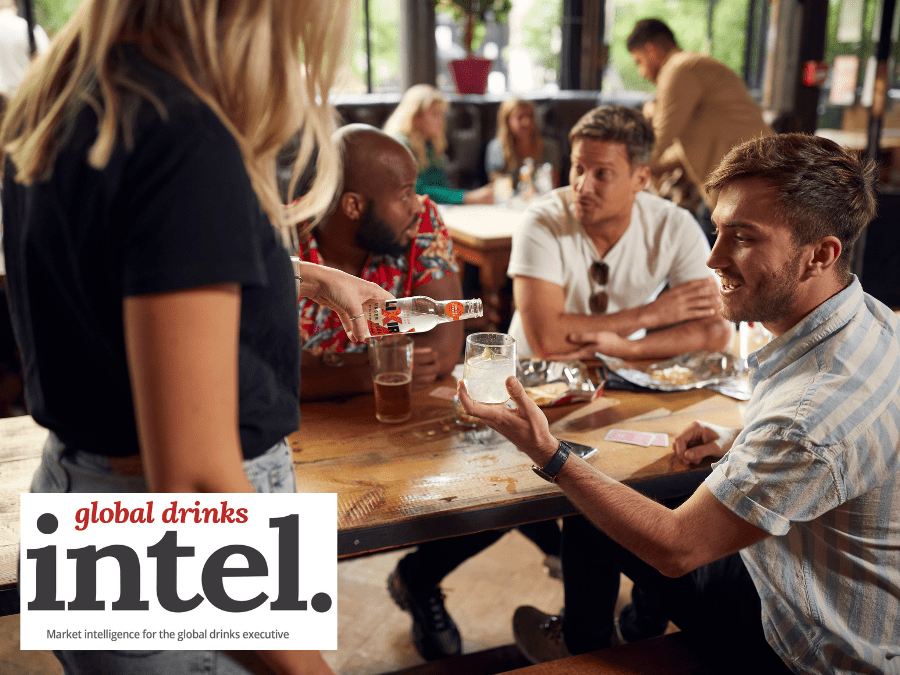
New consumption occasions, evolving consumer trends and collaborations with spirits brand owners are all contributing to exciting times in the mixers & tonics segment. Millie Milliken reports.
In recent years, the world of mixers & tonics has changed massively. Gone are the days of a ‘cordial & soda’: now, alcohol – and non-alcohol – drinkers have a smorgasbord of flavours to choose from – and it looks like proceedings are only going to get more exciting.
According to the ‘Fentimans Market Report 2022‘, mixers held the third spot in the top five soft drinks categories (behind cola and lemonade). Meanwhile, Research and Markets’ ‘Global Tonic Water Market 2022-2026’ report estimates that between 2022 and 2026, the tonic segment alone will deliver a Compound Annual Growth Rate (CAGR) of just under 6,3%.
The prospects, then, are bright, and new product development (NPD) is key to remaining on top of consumer needs and relevant in an ever-growing pool of products. From flavour research to sustainable packaging and responding to spirits brands’ aspirations, the brains behind mixers & tonics have an exciting and creative future ahead.
Creativity abounds
One company that has grown strongly is London-based Lixir Drinks. Founded by bartenders Matt Mahatme and Jordan Palmer, the start-up, which owns the namesake mixer brand, secured a GBP1.1m (US$1.3m) investment earlier this year from ex-Pure Gym founder Peter Roberts and former Pernod Ricard commercial director Chris Ellis. Sales over the last year have leapt 160%, thanks partly to Lixir’s distribution arrangement with Molson Coors Beverage Co, which kicked off in April 2021.
The investment will allow Lixir to continue building brand awareness and put more power behind on-premise activations. “We recently ran our first major activation with one of our flagship stockists, Boxpark, which was a fantastic way to put the brand in front of our core target audience,” explains Palmer. “The energy was amazing, and it was really great to be back out there face to face, sampling our mixers.” Behind the scenes, Mahatme and Palmer have also been working on a bespoke bottle, a more sustainable label and new pack formats – including a larger 50cl bottle – for the off-premise.
Other brands are moving to up their premium status. Fever-Tree, for example, has doubled down on its offering with a limited-edition Passionfruit & Lime and summer-leaning Spanish Clementine Tonic Water. Elsewhere, San Pellegrino is premiumising its packaging offering, switching Tonica Citrus, Tonica Oakwood, Limonata, Aranciata, Ginger Beer and Tastefully Light Tonic to glass bottles, while positioning the range towards early-evening aperitif moments.
Meanwhile, Double Dutch has launched a Pink Grapefruit Soda (ideal for making the Paloma cocktail) this summer.
“We released our Cocktail Sodas in 2020 – our Bloody Mary and Margarita sodas – and had a great response,” explains Raissa de Haas, who co-founded Double Dutch with her sister, Joyce. “We want to ensure we have the right balance of new flavours without overloading or confusing our customers or consumers while maintaining our high standards on flavour balance. We aim to launch one to two releases each year, with trends informing our NPD decisions while considering important gaps in the market to fill.”
Understanding the process
When it comes to NPD, processes differ from brand to brand. At Double Dutch, the two sisters are effectively the NPD department. “We start with our own flavour development, as we always have, in our kitchen,” explains Raissa. “We then take our learnings and our brief to flavour developers to improve on those recipes. They can help us balance the flavours, ensure we have the best natural flavourings and the right nutritional information to ensure our products remain low in sugar and calories, wherever possible.”
The process can take up to 18 months, depending on the specific flavours the sisters are working on. They also listen to their customers – often responding to requests from bartenders, retailers and wholesalers based on what they’re seeing a demand for. The twins have also created products directly in response to requests from spirits brands, such as Bloody Mary Soda for a vodka and Cranberry & Ginger Tonic for a Cognac.
“It’s amazing to work hand-in-hand with spirits partners to understand their market needs and how we might reach them,” reveals Raissa. “Collaborations can vary in terms of approach, we are always open to discuss opportunities – we can be flexible with our partnerships and our NPD processes.”
Another company with a hands-on approach to NPD is Three Cents. Founded in 2014 by bartenders Vassilis Kalantzis, George Bagos, George Tsirikos and Dimitris Dafopoulos, the process starts organically, with the team making samples by hand using fresh fruits and other ingredients. For Bagos and Tsirikos, this allows optimal understanding of each of their products. “This process allows us to understand first-hand what the taste of the ingredient [is like] under the effect of carbonation and also gives us an idea of its behaviour in drinks,” they explain. Once they’re happy with the results, it’s time for the procurement and production teams to take over, with the final flavour available after only six to nine months, depending on the seasonality of the ingredients.
Lixir’s Palmer often looks to the spirits category and the new opportunities that brands from gin to Tequila can offer for mixers & tonics. “It’s been great to see the range of flavours that have made tonic more than just a partner for gin,” she says. “We’ve seen both in the trade and at home that consumers are now more open to easy, delicious serves like a Tequila & Tonic or a Rum & Toni].”
Surprisingly, Fever-Tree’s innovation team comprises just two people, while San Pellegrino has a full end-to-end team to work on NPD, with product testing and consumer validation serving as key factors in the process.
What the consumer says
Of course, many external factors play a vital role in NPD for drinks. Consumer trends are the most impactful. According to Three Cents, two patterns are important to consider: “Dedication to the raw ingredient, meaning that consumers want more products that taste and feel naturally [sic] of the raw ingredients; and simplicity, meaning that consumers want to experiment with their own combinations and prefer simple flavours over complicated multi-flavoured products.”
Fever-Tree’s communications manager Florence Wong also notes that consumers are moving away from traditional spirit-and-mixer serves in favour of more adventurous combinations. “As shown by the very strong performance of our new launches this year, consumers are always looking to discover new flavour combinations,” she explains. “It isn’t just about the Gin & Tonic; we’re also seeing a wave of fans eager to explore combinations with spirits like Tequila, rum and Vermouth – be it a Dark & Stormy, an Italian Spritz, a Moscow Mule or a Paloma – with our range of mixers supplementing the trend.”
The growth of the aperitif occasion, meanwhile, has played into San Pellegrino’s Italian heritage and, in turn, has been matched by the brand’s development of a new mixers range. For Double Dutch, consistency and familiarity are the priority consumer needs it looks to satisfy, while also looking to the no- & low-alcohol trend to create mixers that can stand on their own and don’t need to be combined with a spirit.
Future focus
Looking forward, the rise of long drinks such as highballs means that Three Cents is banking on the growth of sodas. Fever-Tree’s Wong believes an extension of premiumisation in spirits will drive NPD and growth in the mixer & tonic segment.
“That was our raison d’etre – creating the best-tasting and high-quality mixers for these spirits using the best ingredients that nature could offer,” she says. “These trends have only continued but are accelerating as shown by spirits continuing to take share from beer and wine, and with it, the rise of the long mixed drink.”
Over at Double Dutch and Raissa agrees that a rise in the popularity of spirits will help drive mixers & tonics and being able to provide a wider range that can be matched to the entire backbar will be important. Then, there’s health & wellness. “Younger consumers want drinks that are healthier,” says Raissa. “They’re generally more conscious about what they’re putting in their bodies, so nutritional information and lower-sugar, lower-calorie drinks are now a factor for premium mixers.”
This article was initially published in July/August’s issue of Global Drinks Intel magazine. For details on how to subscribe, click here.