

The lifting of EU and UK tariffs is good news, but supply chain pressures, rising costs and the suspension of the lucrative Ukraine market pose challenges for US whiskey. Richard Woodard reports
American whiskey has had more than its share of challenges in the recent past, from the imposition of punitive tariffs in multiple markets to the severe impact of the Covid-19. Now the industry is grappling with supply chain pressures, rising costs and the loss of the Russian market, with exports suspended because of the conflict in Ukraine.
These difficulties come against a backdrop of a much-improved export performance during 2021. According to the Distilled Spirits Council of the US (Discus), US whiskey exports increased by 15% to $975m, accounting for a dominant share of total US spirits exports, which stood at $1.6bn (+14%).
That’s the good news. However, the value of US whiskey shipments in 2021 remained -18% below the level of 2018, before the impositions of EU sanctions and the spread of Covid-19. And, while the European Union suspended its 25% tariffs on US whiskies for two years in January 2022, those tariffs remained in place in the UK until they were finally removed in late March.
“US spirits exports are beginning to bounce back and that’s definitely a positive sign, but the value of 2021 exports remains far below levels achieved before the 2018 retaliatory tariffs kicked in,” says Discus vice president of international trade Rob Maron.
“We applaud the Biden administration for securing a suspension of the EU’s retaliatory tariffs on American spirits, including American whiskies. With approximately 37% of total US spirits exports going to the EU, these retaliatory tariffs have severely impacted American spirits exports.”
The removal of UK tariffs was hailed as “momentous” by the Toasts Not Tariffs coalition — a collective of 50 US beverage alcohol trade associations — but much damage has already been done. US whiskey exports to the UK dropped by -42% between 2018 and 2021, leaving the UK below Japan in the global standings (exports worth $88m in 2021, versus Japan’s $95m, according to Discus) and only just ahead of Australia at $84m. EU shipments, despite the tariff suspension, remain -20% below the levels of 2018 in value terms at $440m.
Such developments are causing smaller brand owners to rethink their export strategies. Houston-based Yellow Rose Distilling, in which Spain’s Zamora Group has owned an equity stake since 2017, has seen its exports develop “beyond expectations”, but head of distillery Michael Langan, speaking before the tariffs were removed, said the UK was not currently part of its plans.
By contrast, he noted that South Korea continues to accelerate after “a breakout year”, and central European markets are also showing great promise.
Scale and diversity raises category’s global profile
The scale and diversity of American whiskey is raising its profile around the world and beyond its traditional markets — even for its rather more esoteric niches. Skrewball, a peanut butter-flavoured whiskey now selling more than 1m cases a year, has expanded into all Canadian provinces and 17 islands in the Caribbean, reports company president Carl Carlson.
“Worldwide interest and enquiries on Skrewball’s expansion have fuelled an elevated level of demand, which aligns with our internal market expansion strategy,” he adds, noting that the company receives enquiries from overseas on a daily basis.
Larger companies may have different ›› priorities. For Heaven Hill, the focus remains mainly on the US, especially as that market starts to bounce back from the effects of Covid-19. As its vice president international sales and marketing Justin Ames notes: “Domestic demand continues to outpace global demand, so the current emphasis has been on market recovery in the US, both on and off-premise.”
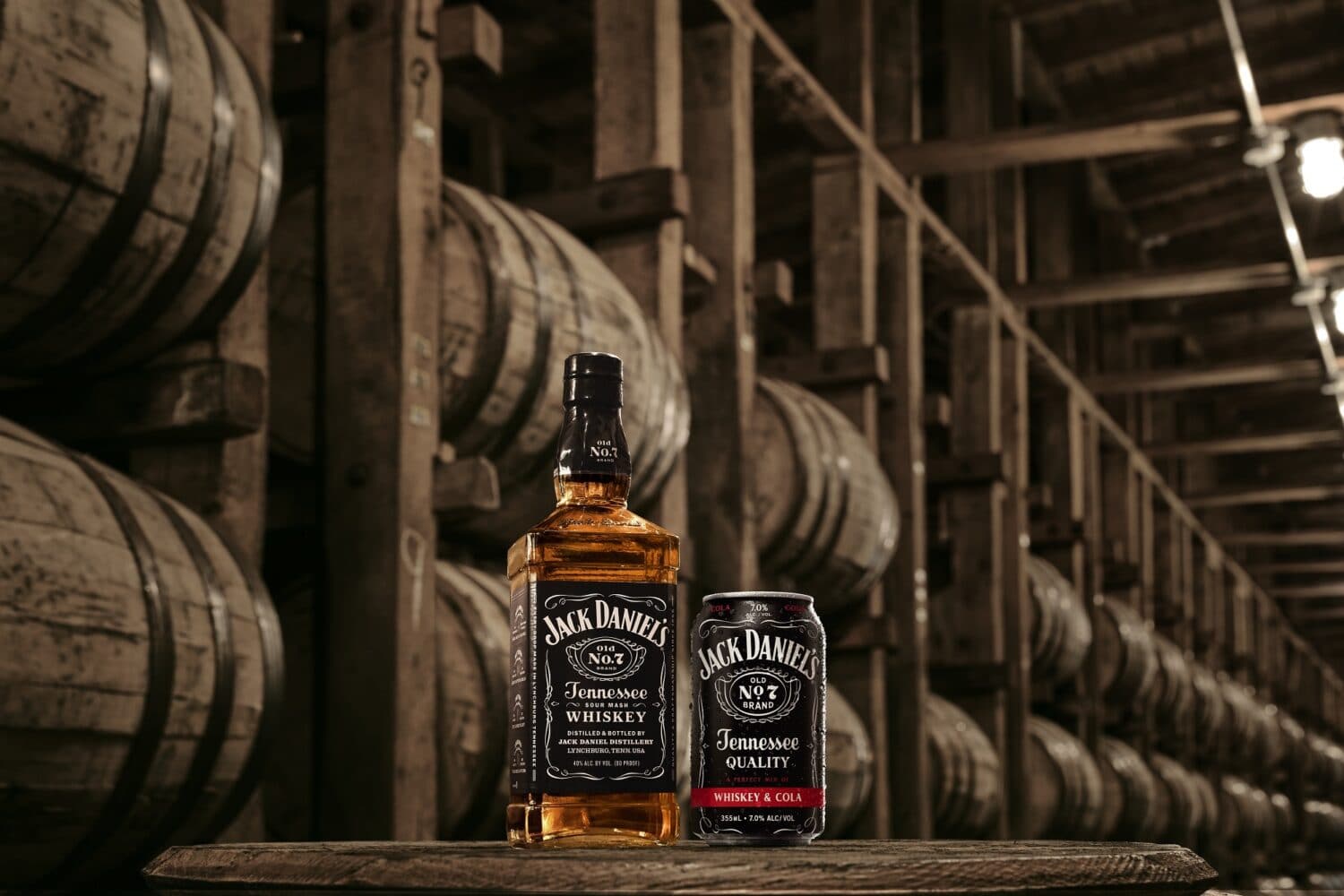
That’s less true for Brown-Forman, where the global profile of Jack Daniel’s and Woodford Reserve, among others, continues to drive international interest. Commenting on its recent Q3 results, the company says: “Collectively, emerging markets, while impacted by supply chain challenges, delivered strong double-digit organic net sales growth year-to-date against favourable prior year comparisons.
“This performance was driven by the growth of Jack Daniel’s Tennessee Whiskey in Turkey and Chile, and the continued launch of Jack Daniel’s Tennessee Apple, most notably in Brazil and Chile. Our overall business in Mexico continues to perform well, as we are experiencing a faster-than-expected recovery in the on-trade.”
While super-brands like Jack Daniel’s and Jim Beam continue to spearhead US whiskey sales at home and overseas, the category’s ever-increasing premium offer and sheer diversity are also driving awareness and consumption. This is evident from the high-end and single barrel offerings from established names, the revival of rye and the resurrection of historical names, such as Michter’s.
The latter’s quality-first approach to its core Bourbons, and its leading role in the rye recovery, have bridged the gap between the industry old guard and the modern craft approach. “I believe that rye complements Bourbon,” says Michter’s Distillery president Joe Magliocco. “With its spice, good American rye is a bit drier than Bourbon, and it seems to appeal more than Bourbon to people who like Scotch.”
Rise of craft distilleries encourages innovative NPD
Discus notes that there were fewer than 100 distilleries (all spirits categories) in the US in 2005; now there are more than 2,300, with exports coming from 45 different states last year
“It’s always been my position that great competition drives greater heights of quality, and I think that we have seen that over the last 10-15 years,” says Langan. “Also, smaller operations have much greater flexibility, and crazy ideas, that have spawned a lot of interesting innovations across the industry.”
Heaven Hill’s Ames agrees. “Craft whiskey has drawn new consumers in and created a curiosity for how products are made, where they are made and who makes them,” he says. “With the rise of craft distilleries, heritage distilleries like Heaven Hill Distillery have been pushed to innovate in more thoughtful, premium ways. Through innovation with different mash bills, barrel char levels, longer ageing or barrel finishes, we have been able to produce elevated products that are a spin on traditional Bourbon or whiskey.”
With some 1.9m barrels in its inventory, the company can play on all of these factors when bringing new products to market, whether limitededition whiskies such as Elijah Craig Toasted Barrel or the more widely available Elijah Craig Barrel Proof, or Larceny Barrel Proof.
This versatility will no doubt be boosted by the company’s acquisition in February of Samson & Surrey, a US spirits business that includes Widow Jane American whiskey and Few Spirits in its super-premium portfolio.
As well as creating an unending stream of innovation, the strength of the US whiskey category can also spawn copycats — as has been the case with Skrewball. The brand’s success has seen a number of me-too products emerge, often at lower price points, but Carlson is sanguine about this.
“While we believe there is room in the industry for innovation, and that competition breeds a champion mentality, we are starting to see trade partners discontinue those items that potentially trade consumers down from a quality and value standpoint, or drive a much lower, less attractive ROI [return on investment],” he says.
Supply chain costs bite as Ukraine conflict hits exports One unhelpful factor with which all brand owners are having to cope is supply chain pressure, from shipping finished products to sourcing packaging materials, with rapidly rising costs. Even a company the size of Diageo, which uses its heft to mitigate against the worst effects of the issue, has had issues with sourcing the bespoke bottles needed for its Bulleit brand, although company CFO Lavanya Chandrasekhar expects this problem to be resolved within a matter of months.
Meanwhile, Brown-Forman says it continues to face issues, largely related to glass supply, and the company expects increased costs to continue to have a negative impact on its gross margin in the months to come, although it expects this to be “largely offset” by the positive impact of EU tariff removal.
Heaven Hill has had to adopt an agile approach, limiting sales to ensure continuity of supply, changing bottle types when absolutely necessary and, earlier this year, changing cap colours to a generic black because of plastic shortages. This has a concrete effect on brand activity. “For certain brands, we have had to either limit the number of markets launching, and/or delay the launch until we are confident that we will receive a continuous and constant supply of the glass bottle,” says Ames
The impact is even more pronounced on smaller companies like Yellow Rose. Langan says supply chain issues are “one of the great risks to continued success” for the company, leaving it with little alternative but to buy more often and in greater quantities — and facing shipping costs that have risen by as much as 400%. “Given these increasing costs, a small price increase will be enacted this year to combat it,” he adds.
That leaves Russia. The suspension of exports because of the conflict in Ukraine has robbed US whiskey of a relatively lucrative market. As with other whisky categories and Cognac, most shipments are made via the Baltic states and Latvia in particular, where 2021 exports were up 23% to $49m, according to Discus.
Brown-Forman has been more affected than most in the category. The company announced in early March that was suspending the importation of all of its brands into Russia, including Jack Daniel’s, as well as all sales and marketing activities in the country. More significantly, it has paused hiring for the new distribution company it had hoped to establish in Russia in July this year — viewed as a key step in driving awareness and sales in what should be an important emerging market for the future. Like other American whiskey brand owners, it will hope to return — but who but who can say when that will be? GDI