

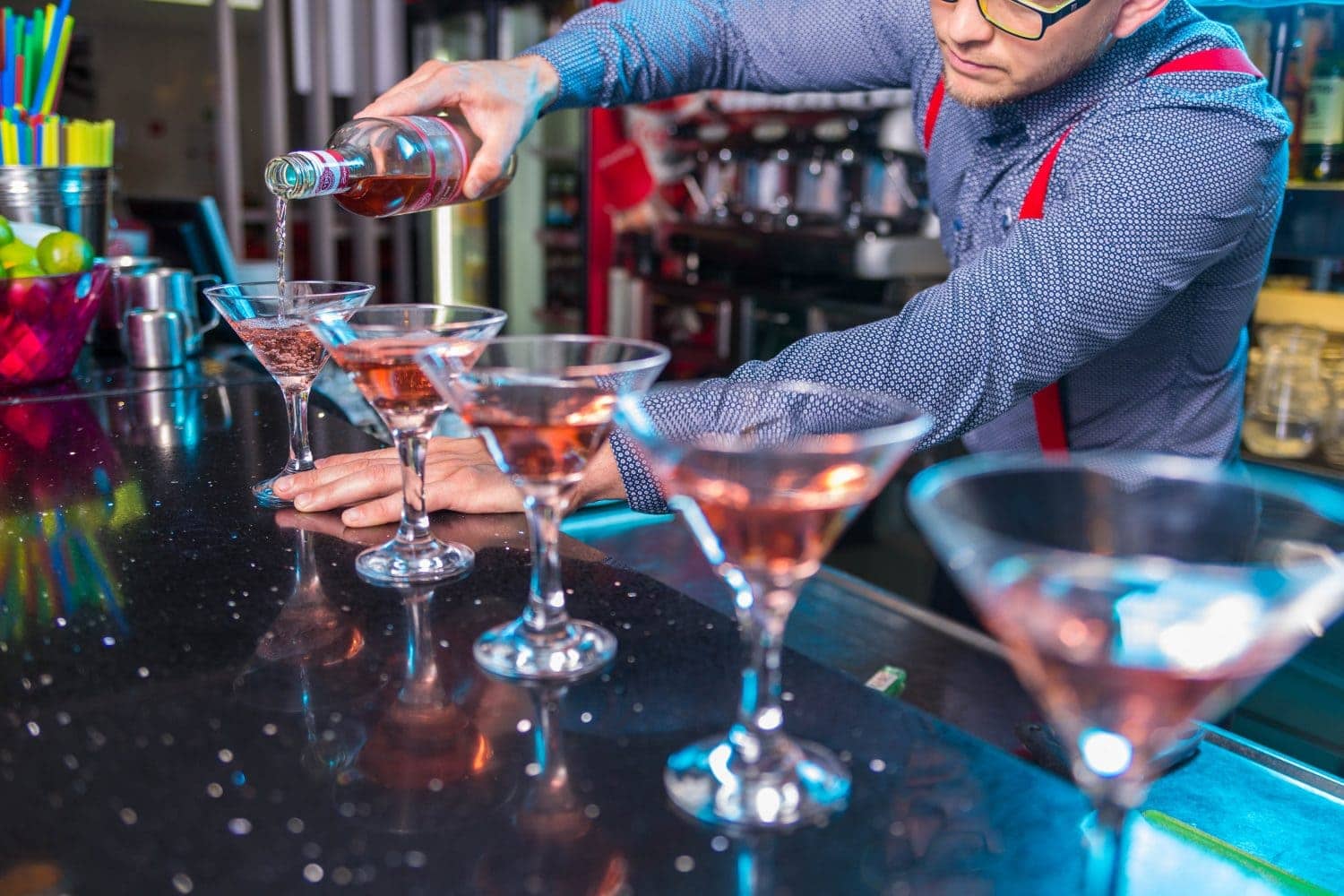
Consumers who were learning about cocktails during the pandemic are now returning to bars and reportedly showing greater interest in drinks and their ingredients — including liqueurs.
As Gabriela Lozada, head bartender at Brujas in Mexico’s capital Mexico City, puts it: “The fascinating thing is that more and more people are coming in with a big interest, and are curious to know what liqueurs we use and how we use them.”
It’s a similar story at Bar Raval in Toronto, the capital of Canada’s northwestern province of Ontario. Bar manager Sally Gillespie says: “We are very blessed to have a solid number of our guests who are invested and interested in the process of what we do, where we get to nerd out with folks.”
For liqueur brands working to educate consumers, this growth in interest, and the potential for bartenders to communicate about these brands with their guests, can only be beneficial.
Simultaneously, consumers are more interested in provenance than ever before, and local liqueur brands in North American markets are well placed to benefit. “At the moment we are focusing on Mexican liqueurs,” confirms Lozada, who adds that “very interesting herbal and flower liquors have launched recently, with a whole range of different flavour profiles.”
Bar Raval also keeps an eye out for local brands. “We certainly try to have a hard focus on what is available to us locally,” says Gillespie.
For Thomas Yeo, head bartender at that Atwater Cocktail Club in Montreal, capital of Canada’s south-eastern province of Québec, the question of local is a little more nuanced. “There are lots of local producers popping up, and I’m happy to use their liqueurs so long as they’re as good or better than existing products I can find internationally,” he says. “I’m more likely to reach for something uniquely local that plays with ingredients or culinary traditions specific to our region than something that’s simply knocking off an established product.”