

London. Entrepreneurs should think twice before investing in hard seltzers in the UK — the category is not the sure-fire success story some would have you believe, argues Brand Relations owner Richard Horwel
If someone offers you the opportunity to get behind their exciting soon-to-be-launched hard seltzer brand, it is up to you how gently you let them down, but let them down you must if you want to avoid joining the easily-parted-from your-cash club.
Sure, there has been a certain effervescence in this sector: market forecasts predicted massive growth, with the UK hard seltzer market expected to reach a value of £75m by 2023, that’s according to a report commissioned by (hard seltzer purveyors) Drty Drinks in February 2021.
Many a bright-eyed entrepreneur hopped on the bandwagon, but as a drinks development and marketing company working with smaller and startup brands, we were reluctant to take on clients in this category: it was clear to us that hard seltzer’s season in the sun would be short.
Fast forward to October 2021 and US brewery Boston Beer reported their bottom line had dropped from positive to negative with a Q3 loss of $58.4m. The cause? An unexpected (and rapid) slowdown in the hard seltzer market. The bubble has burst. You should resist any temptation to enter the hard seltzer market. And here’s why:
The times, they are a-changing
It is easy to understand why hard seltzers (also called spiked seltzer, alcoholic seltzer or hard sparkling water) received a warm welcome from UK consumers. Pre-pandemic, the end of the working week would see many of us relaxing in bars, clubs and restaurants. But Covid-19 restrictions closed those establishments and, with no pub to go to after a long Zoom shift, the best we could do was to shuffle our slippers in the direction of the fridge. And with a view to avoiding becoming part of a lockdown beer belly boom, there was a rethinking of beverage choices among many of the newly health-conscious. Hard seltzers, with a (relatively) low alcohol by volume (ABV) and lower calorie content, were seen as healthier options.
However, drinking at home and drinking out are different.
As life shifts to something more closely resembling what we used to call normal, we are returning to our former haunts, expecting and looking forward to the experiences we remember. Many people may have gotten into baking their own bread during lockdown, but how many will take their homemade artisan adjacent sandwich to the office and how many will just go back to Greggs, Pret or M&S? Chicken Caesar wraps, BLTs and steak bakes are what UK consumers remember from their pre-pandemic lunchtimes. And their pub memories are not of drinks that are essentially flavoured water and ethanol.
Even for those Brit consumers who have fully embraced the hard seltzer habit (the largely fruity flavour profile of hard seltzers suits palates that eschew wine and beer), disappointment is inevitable because most bars don’t and won’t sell hard seltzers. It is my experience that brands often have to incentivise establishments to stock their wares. One drinks brand was told that while the manager was happy to sell their products, for the owner to get on board they would need a stay in a swanky New York hotel and a couple of first-class tickets to get there.
Perhaps the big players can afford that kind of thing — if they considered it worth the investment — but smaller brands certainly can’t and, even if they could, they would still be unlikely to make a profit from the result of that investment.
You can say what you like, as long as you stick to the rules An obvious advantage when marketing hard seltzers is that they contain fewer calories than other alcoholic drinks. A 35cl can is standard for the majority of hard seltzers, with each of those containing around 100 calories; a 35cl serving of craft beer could contain up to 350 calories. Although the amount of sugar varies between hard seltzer brands, each serving will have fewer than 3g of sugar. Within that framing (compared with beer, wine or fruity cocktails), a hard seltzer could be considered a healthy option. Hard seltzers tick a lot of boxes: generally lower-alcohol, low-carb and gluten-free.
But, in the UK, brands cannot make any health claims about their hard seltzers — they do contain alcohol after all. A few hard seltzer brands (including BrewDog, High Water, Drty and Whisp) have already fallen foul of the Advertising Standards Authority (ASA) for making stated or implied health claims.
If the big guys aren’t getting away playing the health card, how are smaller brands supposed to communicate their message? To stand out, significant resources are required: money that small startups don’t have, leaving them lost in the frothy wake of the bigger brands’ budgets.
The UK is not the US
Much of the projected success of the UK hard seltzer market was based on the sector’s US growth. Despite the well-known saying, the interests of the goose and the gander are not always aligned. Stateside success is not always mirrored on this side of the Atlantic. For example, Energy Shots took off in the US (and are still performing well), and bandwagon jumping took place in the UK, but the wheels came off and many Energy Shot brands vanished from shelves.
Even when tastes are similar, the sales environments differ. In the UK, we are far more limited about what can be claimed for products. For American hard seltzer producers, their advertising can reference fitness and sports, but the rules of the ASA mean similar suggestions cannot be made here.
The UK population knows what lager is and is familiar with G&Ts and Pimm’s, but the hard seltzer concept needs explaining, which is not easy when the promotion of alcoholic beverages has so many restrictions. There is a huge challenge getting the message across to the consumer. Therefore, consumers looking for ready-to-drink products are likely to opt for bottled or canned beers or premixed spirits-and-mixer cans with familiar combinations, such as rum-and-Coke.
Merely offering more options isn’t enough A few months ago, after witnessing several new hard seltzer launches every week in the trade press, I mused that there were more new offerings on the market than there were consumers to drink them!
An exaggeration for sure, but in my experience, too many brands in the same category results in consumer confusion; there can be so many options that consumers don’t buy anything. Shoppers entering an aisle with too many options either pick a brand they are familiar with or, often, step into another aisle for something different that they already know they like.
Hard seltzers will not completely disappear, but it will be the small players who will suffer and ultimately wither, while the big boys take over and thrive. The lion’s share of a market (and then a bit more) goes to the biggest players because consumers turn to what they know. A year-and-a-half ago, trade journals featured just two or three hard seltzers, initially being offered by smallscale entrepreneurs. But soon the big boys caught on; they tend to dislike losing market share. When big brands enter a sector, it shifts — and that is rarely good news for smaller entrepreneurs.
Coors, Kopparberg and Smirnoff have all released their take on the hard seltzer, and the big, well-known brands are dominating, pushing their lesser-known rivals out. Boston Beer may have been taken off guard by changes in the hard seltzer market, but they still have the No.2 brand, Truly, in their seltzer space and they are positioning themselves to make a big push into the UK market with line extensions including a margarita product.
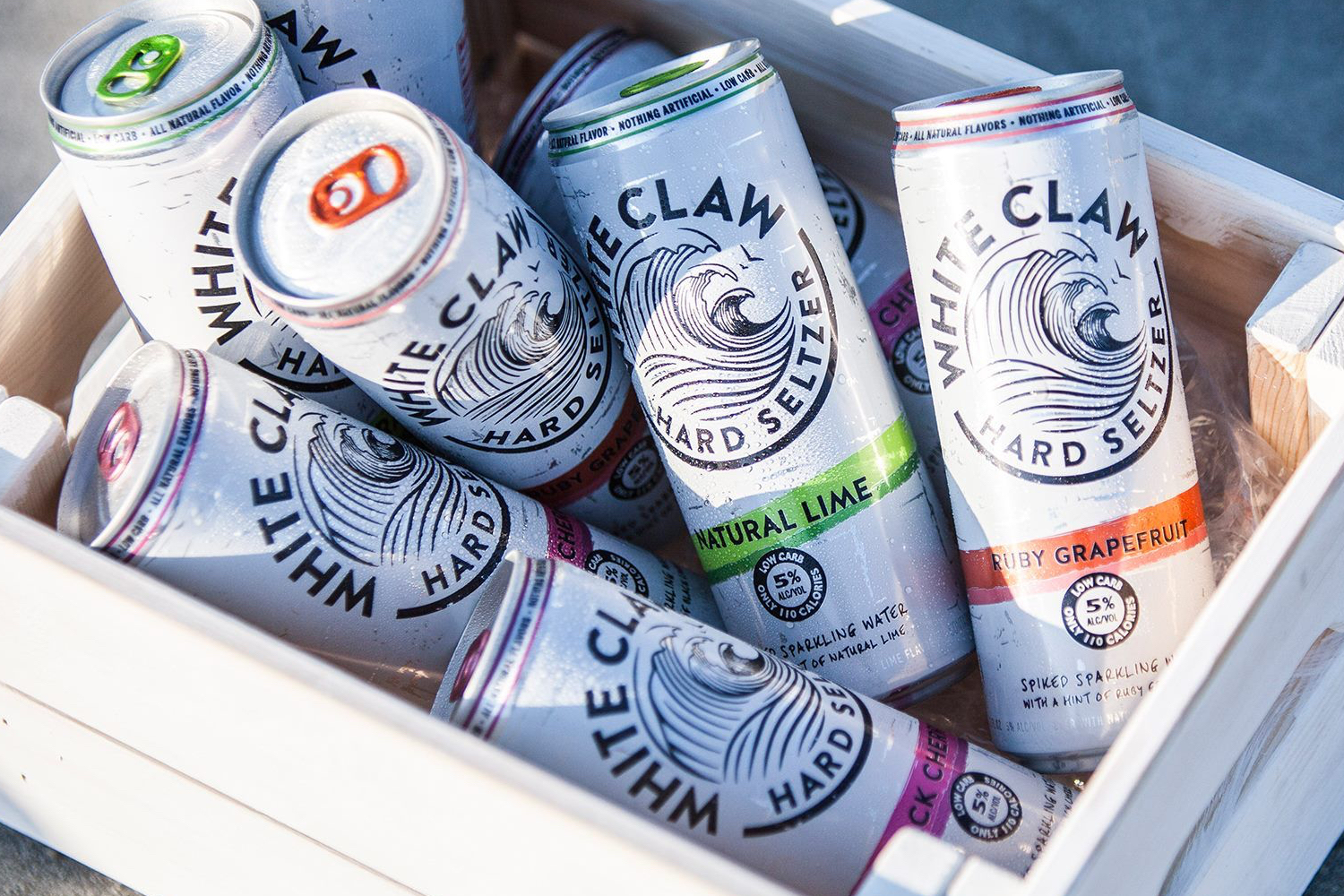
To compete, small brands need to come up with big bucks: to stand out they will need to spend something in the region of £100,000 ($130,000) just for marketing, remembering that their promotional campaigns will still be limited by what they can actually say. This kind of money is huge for a startup, but a drop in the ocean for established, accepted brands to invest to ensure they don’t lose market share. It is common for small brands to fail after spending all they have, leaving the market to the big brands, such as White Claw.
Some final words of advice Are hard seltzers an exciting drinks development? Do they have a bright future? I think not. Forecasts foretell fading enthusiasm for the hard seltzer sector. We saw this coming. We didn’t touch the market because we won’t take on a project unless we feel sure it has a very strong chance of success. There will always be casualties in any new sector and we will only take on a brand if we are sure we can take it to market successfully. That is why we have not engaged with the hard seltzer fad.
Of course, entrepreneurs and startups should not dismiss looking at launching an innovative new drinks brand — RTD or not, alcoholic or not — we are simply advising that hard seltzer is not the sure-fire success story some would have you believe.
GDI Richard Horwell owns Brand Relations, a specialist food and drink marketing and branding company based in London. He has over 30 years’ experience in marketing FMCG brands around the world, having lived and worked in the UK, the US, Australia and the Middle East. www.brandrelations.co.uk