

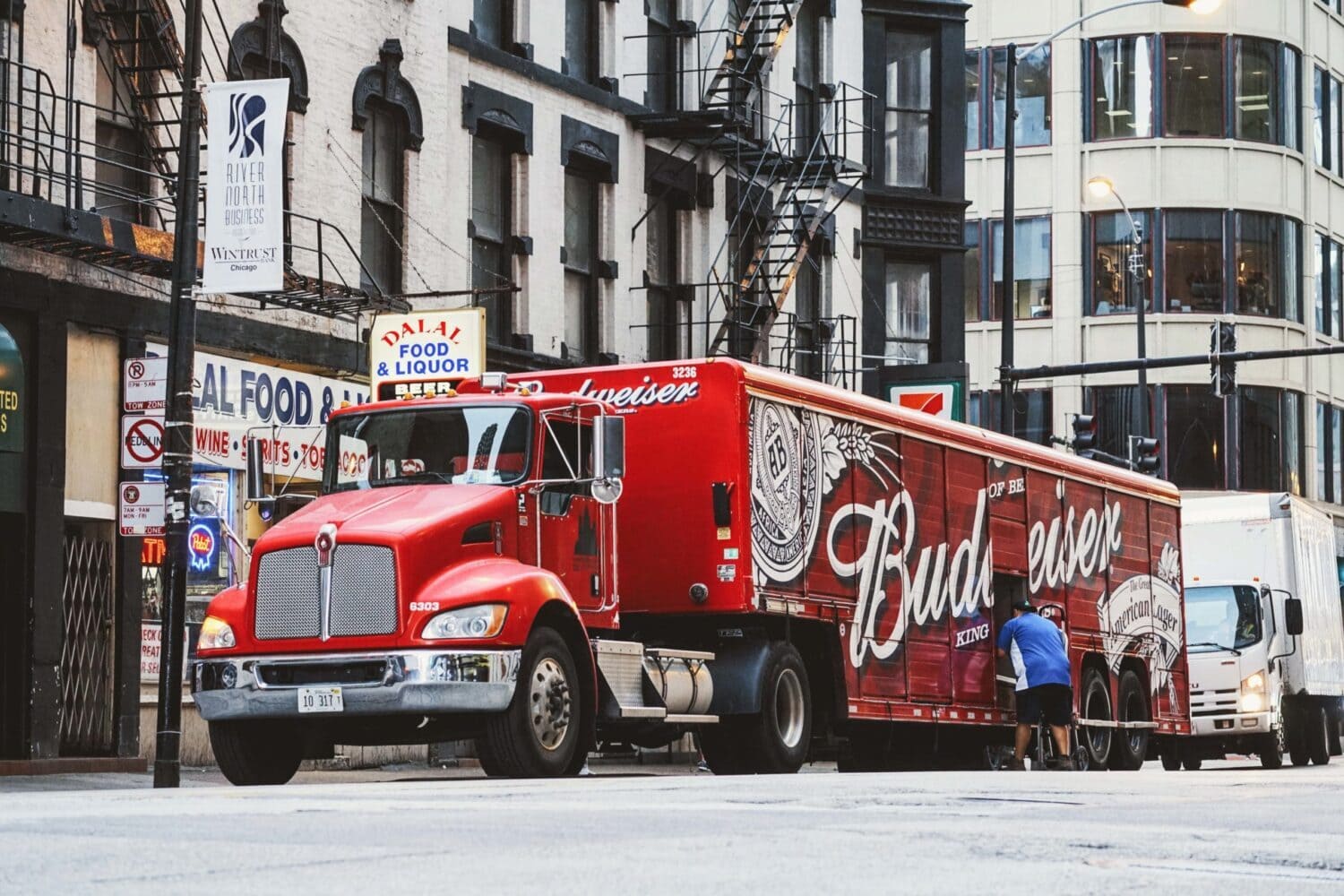
New York. Anheuser-Busch InBev (A-B InBev) delivered top-line sales growth of 11.1%, with 2.8% volume growth. Revenue per hectoliter grew 7.8% driven by the implementation of pricing actions across its markets and enhanced by ongoing premiumization and continued recovery of the on-premise channel.
EBITDA increased by 7.4% as the group managed anticipated commodity cost headwinds and elevated supply chain costs. Overall A-B InBev delivered normalized EPS of $0.67 and underlying EPS of $0.60. CEO Michel Doukeris said: “Our business momentum continued this quarter, and we are very pleased with our performance to start the year.”
A-B InBev by country and region
In the US, A-B InBev’s ‘Above Core Portfolio’ continued to over-perform, led by Michelob Ultra. which grew volumes by double-digit. Within the spirits-based ready-to-drink segment, its portfolio continues to grow ahead of the industry, led by Cutwater.
On the subject of pressure on disposable income in the US for the mainstream beer consumer, Doukeris said: “Mainstream is more impacted by seasonality than premium offers. We are all looking forward to the summer in the North American zone…Our expectation is that mainstream brands will perform well during the summer because we don’t see indications of hard elasticity or less consumption so far in North America. And given how robust the economy is so far, salaries are moving up, employment is up, I think that beer will weather very well what’s coming ahead in North America. But we need the summer to start. That’s what we are looking for.”
A-B InBev continued its momentum in Mexico, delivering double-digit top and bottom-line growth and growing volumes across all segments of its portfolio. The company has recently expanded through the powerful OXXO chain in Mexico. Doukeris said: “OXXO is an incredible opportunity and a great partner, a great retailer in Mexico. We have now covered two-thirds, give or take, of those stores…Two-thirds gone, one-third to go. And in this one-third, the opportunity is bigger, because our market share and our distribution [in the North] are much smaller than our average in the country.”
The business in Brazil also delivered double-digit top-line growth with beer volumes once again outperforming the industry, growing by 2.1%, despite lapping a strong comparable period.
In Europe, A-B InBev also grew its top and bottom line by double-digits, driven by volume growth, on-premise reopening and supported by revenue management initiatives. Its premium and super-premium portfolio led the way in growing revenues by mid-teens, representing now over 50% of total revenue.
In South Africa, A-B Inbev continued its momentum, delivering above 30% top-line growth with volume increasing in the mid-twenties ahead of the industry. All segments of its portfolio grew this quarter, led by over 40% growth in the company’s leading core brand Carling Black Label.
In China, momentum continued into the start of the year with a strong Chinese New Year. However, the implementation of COVID-19 restrictions in March led to a total industry decline of 1.2% in the quarter, according to company estimates.
Doukeris said: “The underlying momentum in China remains strong, but the COVID restrictions were also in place through the majority of April and early May. But now in May, you start seeing Guangdong, a little bit of Fujian coming back. As the restrictions are lifted, then the consumption comes back. And we see China as one thing. But even in APAC, when you look, for example, at Korea, the momentum is very strong.”
Innovation and e-commerce drive growth
Doukeris noted that innovation for the quarter supported category expansion contributing approximately 8% of total Group revenue. This was driven by what Doukeris terms the five levers: making the beer category inclusive for all consumers; superior core propositions; occasions development; non-alcoholic beer category; premiumization; and Beyond Beer offerings. The company’s ‘Beyond Beer’ business contributed over $350m in revenues in Q1, led by the U.S. where Cutwater grew by strong double-digits.
Meanwhile, the company’s core beer category continues to demonstrate strength. Doukeris said: “We are operating in a big, profitable and growing category. Beer is gaining share of throat globally. Our beer business has momentum. Driven by our leading brand portfolio and our accelerated digital transformation, volumes grew in more than two-thirds of our markets.” On top of that, this year presents unique opportunities to activate demand, such as continued on-premise reopening and the return of marquee events, such as Carnival and the World Cup.
Reopening of the on-trade
The reopening of the on-trade in Q1 remains a major growth driver for the beverage alcohol industry. Doukeris said: “On the on trade, what we’ve been seeing is different behaviour market-by-market. I think that’s very clear for us that as you see markets reopening in some places, restrictions coming back, partially lifted or fully lifted, that it is different behaviour. And on average, when everything goes back to normal, we will be at 90%-plus of the volume versus 2019 back right away. And that was the reality in the United States when we saw the reopening. That was the reality in Brazil when we saw the reopening, it was in Europe.”
Meeting inflation
Inflation is on the rise in many global markets and is at 40-year highs in markets such as the US and UK. A-B InBev implemented the majority of its price increases in Q4 or Q1. Doukeris said: “One thing that’s very clear now is that the inflation is moving much faster than what was anticipated and that the beer prices are lagging inflation so far in the year. So, we continue to monitor how things are unfolding, and we continue to work very close to the market and make sure that we are meeting the moment. He added: “We believe it is too early to see the consumer impact on spending. I continue to think that’s a little bit too early to measure all the impacts of that and the consumer elasticity.”