

Pennsylvania’s liquor monopoly charted record sales and continued to evolve— all while juggling Covid-19 closures. Global Drinks Intel’s Roger Morris reports
Five years ago, for the first time in almost 100 years, residents of Pennsylvania were able to walk into a supermarket and come out with — not only milk and bread — but up to four bottles of wine.
The fifth most-populous state in the US, Pennsylvania is one of only 17 of the 50 states to maintain a government monopoly on the sale of alcoholic beverages. Every few years, the system faces an attack by a group of legislators seeking to privatise the sale of wine and spirits in line with the set-up in most other states. Each time, the fortress has remained standing.
In 2016, however, even though the Pennsylvania Liquor Control Board (PLCB) remained intact and jobs for its 5,593 employees were secured, the passage of Act 19 allowed the forces of privatisation to drive away from the wall of resistance with a truckload of bricks. “When grocery and convenience stores were given the opportunity to sell wine, for the first time in more than 80 years, the PLCB had retail competition,” says current PLCB executive director Michael Demko.

“Today, there are more than 1,000 retailers that can sell limited quantities of wine to-go,” explains Demko, who quickly rose to the PLCB’s top position in 2020 after joining the agency as finance director in 2018. “We’ve had to evolve both as a wholesale organisation to support this new line of business and as a retailer to remain competitive in an expanded wine market.”
Well, sort of. Act 19 also allowed the PLCB to retain control of that load of bricks by serving as chief wholesaler to its new competition as well as regulating who would have a license to compete and who would not — still a costly and limited option.
The PLCB was still in the process of adjusting to that challenge cum opportunity when, three years later, it ran headlong into the Covid-19 pandemic that completely closed the doors to all in-store sales by early 2020.

Despite those twin challenges, the PLCB’s operations have recovered with utmost resiliency as things now progress toward a new normal. Total sales for fiscal year 2020-21, which ended 30 June, were a record $2.7bn, an increase of 13.7% compared with the year prior. Even when compared to pre-pandemic sales for fiscal year 2018-19, sales for 2020-21 were up 3%, although less of a gain than in many non-control states. More than $813.4m of that was distributed as ‘profit’ to state and local funds, an almost 30% net return.
About 60% of that total $2.7bn was spirits sales and 40% wine. The breakdown between retail sales and wholesale sales to grocers, restaurants and other licensed outlets remains heavily weighted to retail, with the state claiming 80.6% of the business, while ‘losing’ less than 20% to its new competitors. Spirits gained 86% of its total sales at the retail or direct level (1.4bn), while wine received 73% of its total ($800.7m) at retail.
Following the trends
The PLCB’s record sales were driven by several upward market trends:
■ Ready-to-drink wine and spirits is an exploding market segment:
In fiscal 2020-21, combined dollar sales for canned and non-canned RTD wine and spirits increased 91.3% over the prior year.
While RTD wine had the greatest percentage increase — 144% over the previous year to RTD spirits’ 82% increase — RTD spirits brought in much more income, $34m to RTD wine’s $8m. Within the category, canned drinks saw the biggest growth — 336% over the previous year.
“From a merchandising standpoint, the addition of coolers featuring canned RTD four-packs near checkout areas in premium stores further increased access to canned products for customers and buoyed sales,” Demko says.
■ Consumers are trading up in price and quality — especially for spirits:
Spirits experienced the largest growth in the premium segment — a jump of $111m— with combined sales of Cognac and other brandies, whisky and vodka accounting for $79.3m or 71.5% of the premium dollar gain. Within that category, ultra-premium had the highest percentage change — 59.1% — with whisky and tequila accounting for most of the increase.
Among wines, red table and sparkling had the highest dollar increase.
■ Tequila shows no sign of slowing down:
Total dollar sales for tequila increased by 52.3% over the previous fiscal year, riding the wave of the general trend toward premiumisation. Sales of products in the $40-$60 price range increased by 81.2% or $22.2m, while sales of products in the $20-$40 price range increased by 48.9% or $18.3m. Tequila segments exhibiting the most growth in dollar sales included silver or blanco ($29.3m), followed by reposado ($9.4m). “One thing we have found that seems to hold true over the years is that spirits consumers tend to be more fiercely brand-loyal than wine consumers,” Demko says.
■ Box wine edged into the super and ultra-premium categories:
Wine experienced the largest growth in the super-premium segment ($21.1m), with sparkling ($6.4m), white table wine ($5.2m) and box wine ($4.7m) accounting for 79.3% of the super-premium segment gain.
■ Rosé has not completely lost its bloom:
Overall sales of rosé increased for the fifth straight year with a modest overall jump of 1.3% or $816,943. The largest gain was in the $20-$30 price range (+49.5%), while sales of products in the $10-$20 price range increased by less than 1%.
Sales of rosé priced over $30 decreased by -18.6% compared with the previous fiscal year. Top dollar gains in rosé can be attributed to newer products, Demko says, such as Château d’Esclans, Whispering Angel Rosé, Cotes de Provence 2019 and 19 Crimes Cali Rosé.
The road from 1933
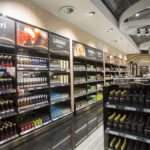
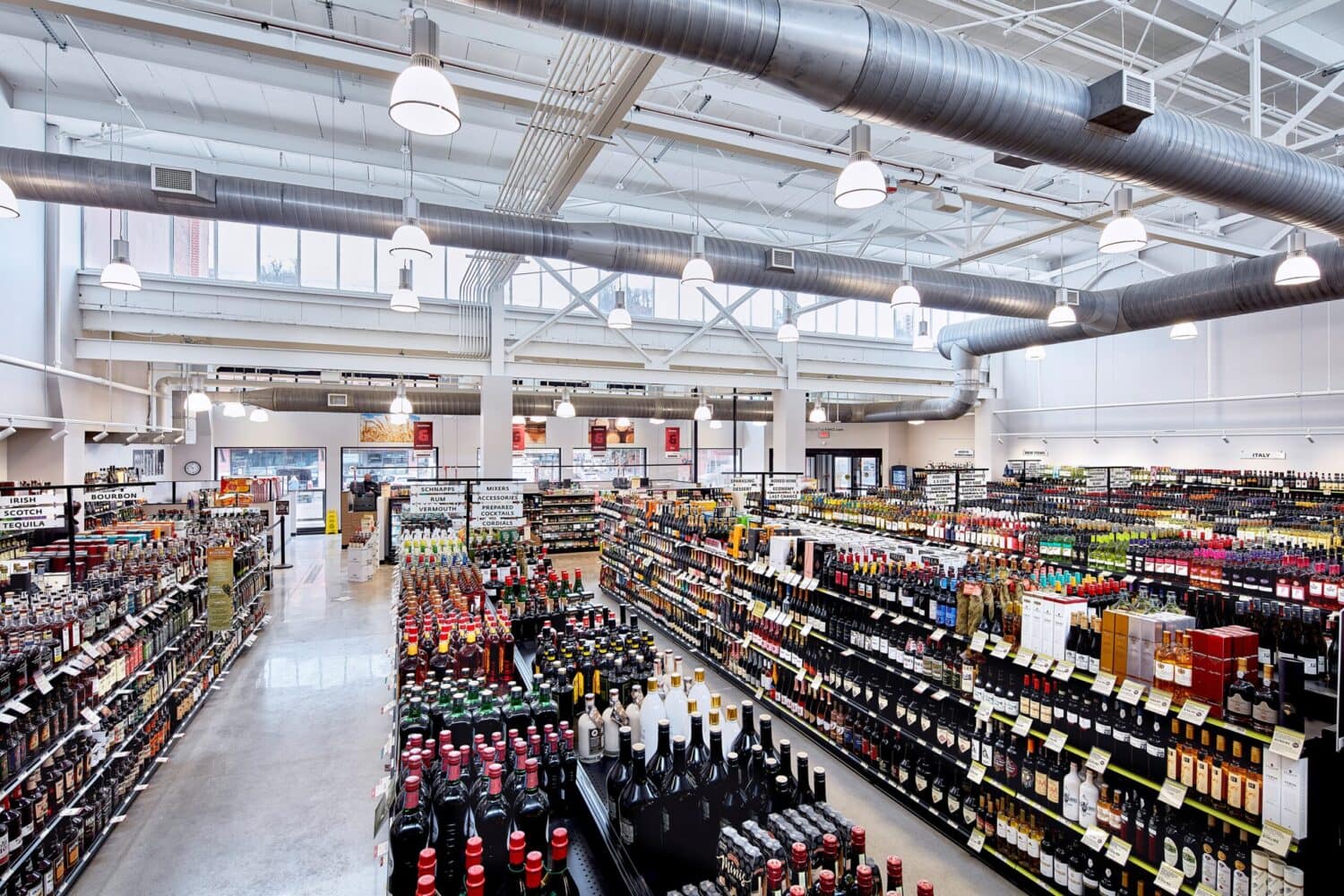
Currently, the PLCB operates 585 retail outlets, called Fine Wine & Good Spirits, each with uniform pricing, in addition to serving as wholesaler to grocery stores, restaurants and other outlets.
Once known as somewhat stodgy and bureaucratic, the PLCB, like the other 16 state-run alcohol monopolies, is a product of the post-Prohibition era in the US. After the country’s ‘noble experiment’ of temperance — which ran from 1920-33 — proved to be one where only organised crime and one-off bootleggers profited, individual states and localities sought a middle road between ‘wide open’ and ‘closed shut’. State stores were one answer, and, in Pennsylvania’s case, it has been an uninterrupted run of almost 90 years since its founding in November 1933.
In the current century, there has been a struggle to advance the system beyond a Soviet-style hegemony into a smoothly run state-owned utility. The choice of Demko, whose prior business experience was in the retail clothing and hospitality industries, reflects that. His No.2, chief operating officer Andrew Collins, has a similar background in retail and merchandising.
“The most significant change in the past five years is a statutory modernisation that allows the PLCB to negotiate product acquisition costs and retail pricing with vendors, rather than having them dictated to us, as was the case under previous strict pricing formulas,” Demko says. “We are able to work with vendors to get the best possible cost, then set a competitive retail price from there.”
Demko says the PLCB has also embarked on a three-year, $83m “enterprise resourcing plan” called Project New Horizon to better integrate the agency’s three major businesses — traditional retailing, emerging wholesaling and streamlined production — using a cloud-based platform. Improvements are expected in such areas as financial reporting and data reconciliation, inventory management and master data processing.
The agency is also in the process of reducing its three distribution centres to two by April 2022, after opening a new one in late 2020 in south-eastern Pennsylvania— the Philadelphia area — which is a third larger than the prior warehouse, housing twice as much inventory, up to 1.5m cases. But the major advancement within the system has been e-commerce transactions.
“To put things in perspective, the year before Covid-19 hit, we fulfilled about 39,000 e-commerce orders worth about $5m,” Demko says. “In our first 90 days of e-commerce sales during the pandemic, we took about 225,000 orders worth $23m. At its peak, more than 9,000 e-commerce orders were submitted daily, and, by the end of June 2020, e-commerce sales in fiscal year 2019-20 totalled $26.8m for 1.3m units.”
“While we may never see the incredible level of traffic that we did during the first months of Covid-19,” Demko continues, “we know e-commerce will remain a vitally important retail channel for our customers.”
And with the state’s residents now having an alternate shopping opportunity, at least for wine, the PLCB fortress seems safe — at least for another few years.●